
Finance
LessInvest.com: Financial Advice and Investment Guides


The name LessInvest.com might sound like a service that helps people invest smaller amounts of money. Its actual message is a little different: spend more deliberately, manage your finances, and make room for long-term investing.
That idea runs through the website’s articles about budgeting, debt, stocks, cryptocurrency, real estate, and retirement planning.
But there is an important distinction between learning about investments and receiving advice tailored to your circumstances.
LessInvest.com presents itself as a personal finance and investment education publication. The website’s reviewed pages do not establish that it operates a brokerage or provides individualized investment advisory services.
Its articles can introduce financial concepts and help readers ask better questions. They cannot determine which investment someone should buy, how much risk they can afford, or whether a financial product is suitable for them.
What Is LessInvest.com?
LessInvest.com is an online financial publication built around the idea of spending less and investing more.
Its About page presents the website as a media outlet covering financial news, educational guides, and practical money-management topics.
The publication focuses on three broad areas: financial wellness, controlling spending, and understanding investments.
These subjects are connected.
A person struggling with high-interest debt may need to consider repayment costs before increasing investment contributions. Someone with more stable finances may want to understand how stocks, bonds, or funds could fit into a longer-term plan.
LessInvest approaches these questions through articles rather than individual financial consultations.
Its website also features recent stories about specific investment products, borrowing decisions, market trends, and business finance.
How LessInvest Organizes Its Financial Content
One useful aspect of the website is that its navigation separates everyday money management from investment education.
The three main areas serve different purposes.
| Main section | Topics covered | Reader’s likely goal |
|---|---|---|
| Spend Less | Budgeting, saving hacks, spending tracking | Understand and manage expenses |
| Invest More | Stocks, bonds, ETFs, crypto, real estate | Learn about investment options |
| Financial Wellness | Credit, debt, retirement, passive income | Improve overall financial planning |
This organization reflects the website’s central message: investing is only one part of managing money.
A reader interested in reducing monthly expenses can explore budgeting articles without immediately moving into investment products.
Likewise, someone researching ETFs can find related investment content without assuming the website executes trades.
Spending Less: Budgeting and Saving Guides
The Spend Less section covers practical questions about household spending and saving money.
Its categories include budgeting, saving hacks, and spending tracking.
For example, a reader who regularly pays banking fees might benefit from understanding how account charges work and which questions to ask when comparing financial institutions.
In a March 2026 article, LessInvest explored ways readers could reduce monthly banking fees and keep more of their savings.
Other articles address how everyday expenses can affect a household’s financial position.
The broader principle is that small recurring costs deserve attention because they can reduce the amount available for other priorities.
However, spending less is not always simple.
Housing, healthcare, transportation, and essential bills may consume most of a household’s income. Financial advice that assumes everyone has substantial discretionary spending can overlook those realities.
Budgeting guides are most useful when they help readers identify realistic choices instead of suggesting that every expense can be removed.
Investment Guides: Stocks, Bonds, and ETFs
The Invest More section introduces several major investment categories.
Each comes with different characteristics, costs, and risks.
Stocks
Stocks represent ownership interests in companies.
Their value can change with business performance, economic conditions, investor expectations, and market activity.
LessInvest publishes articles explaining stock market concepts, including pre-IPO shares and the construction of major stock indexes.
A May 2026 article on LessInvest examines how market-capitalization weighting affects the composition of the S&P 500.
That subject matters because an index’s largest companies can have a greater influence on its performance than smaller constituents.
Understanding how an index works is useful before comparing investment funds that follow it.
Bonds
Bonds are debt instruments issued by governments, companies, and other organizations.
Investors generally receive payments according to the bond’s terms, although some bonds have different structures.
Bonds still carry risks, including interest-rate risk, inflation risk, and the possibility that an issuer fails to meet its obligations.
A bond guide can explain these mechanics, but it cannot establish that every bond is a conservative investment.
Exchange-Traded Funds
Exchange-traded funds, or ETFs, allow investors to buy shares in funds that hold particular assets or follow defined investment strategies.
Some provide exposure to broad markets, while others concentrate on a single industry, commodity, or investment theme.
That difference is important.
An ETF investing in a narrow sector may expose investors to substantial concentration risk even though it contains multiple securities.
The U.S. Securities and Exchange Commission’s Investor.gov guide to asset allocation and diversification explains why owning several funds does not automatically guarantee a diversified portfolio.
LessInvest’s educational content can provide introductory explanations, while official fund documents are needed to evaluate a particular product.
Cryptocurrency and Real Estate Coverage
LessInvest also publishes articles about cryptocurrency and property-related finance.
Its cryptocurrency section includes topics such as digital payments, crypto cards, and developments involving blockchain-based financial services.
For instance, a July 2026 article examines how cryptocurrency-linked payment cards may help people transact across borders.
This subject involves more than the underlying cryptocurrency.
Fees, conversion methods, card-provider terms, regulatory restrictions, and the availability of particular services all affect the user experience.
A general article may introduce these considerations, but readers should verify them with the actual provider.
The website’s real estate coverage is another part of its investment focus.
Property-related articles can help explain financing, investment terminology, and different ways people seek exposure to real estate.
However, real estate investments involve costs that may be easy to underestimate, including taxes, repairs, insurance, financing, and periods without rental income.
Neither cryptocurrency nor real estate should be treated as a guaranteed path to financial independence.
Financial Wellness: Credit, Debt, and Retirement
LessInvest’s Financial Wellness section looks beyond investments.
Its categories cover building credit, debt management, entrepreneurship, passive income, and retirement planning.
These subjects matter because a person’s financial condition is not measured only by the value of their investment portfolio.
For example, someone carrying expensive credit card debt may face a very different decision from someone building retirement savings with no high-interest debt.
Credit-related guides can introduce concepts such as credit history, payment behavior, and borrowing costs.
Retirement articles may help readers understand the importance of saving over time and planning for future expenses.
The challenge is that these decisions depend on personal circumstances.
Age, income stability, location, tax rules, financial obligations, and risk tolerance can all change what makes sense.
LessInvest provides general information rather than a personal assessment of these factors.
Is LessInvest.com an Investment Platform?
The website’s name can create confusion about whether visitors can invest money directly through it.
Its documented functions focus on publishing articles.
The official pages reviewed do not establish a brokerage account system, securities order execution, cryptocurrency custody service, or managed investment portfolio offered by LessInvest.com itself.
This is different from an investing application.
A brokerage ordinarily provides customer agreements, trading functionality, account statements, and information about the legal entity responsible for executing or holding investments.
LessInvest’s published disclaimer instead explains that its content is intended for general educational purposes.
If another website or individual uses a similar name to request funds, that offer should be evaluated separately.
Who Runs LessInvest.com?
The website’s About page describes its editorial team as a group of financial experts, journalists, and storytellers.
It presents this as part of its editorial mission.
However, those general descriptions do not independently establish the qualifications of every contributor.
The public pages reviewed also do not clearly identify a verified legal operating company or its ownership structure.
A publicly available WHOIS record lists October 25, 2022, as the domain’s creation date.
Its registrant details are protected by a privacy service.
That is not inherently suspicious. Many domain owners use privacy protection for legitimate reasons.
At the same time, registration age and privacy settings do not verify editorial expertise or establish financial regulatory authorization.
Readers should distinguish a publication’s stated mission from independently confirmed professional credentials.
Is LessInvest.com Reliable?
LessInvest.com is an operating website with an organized article archive, published content, and an explanation of its editorial purpose.
As of November 13, 2026, the homepage displayed articles dated through October 30, 2026.
That establishes an active publishing presence, not a guarantee that every financial statement is accurate.
The reliability of individual articles depends on their sources, dates, and subject matter.
An explanation of how the S&P 500 works can be checked against official index methodology.
An article discussing a loan should reflect current lending terms and applicable regulations.
Financial products can differ significantly between countries, so readers should also check whether the information applies to their location.
The publication’s own disclaimer acknowledges that content may not always be complete, current, or suitable for a particular purpose.
For significant investment decisions, original documentation is more reliable than an article alone.
What Are the Limitations of LessInvest?
The website’s educational approach has several limitations.
First, general guidance cannot replace an individualized financial plan.
An article may explain the benefits of diversification without knowing whether a reader needs emergency savings, has expensive debt, or faces near-term expenses.
Second, investment information can become outdated.
Fund fees, borrowing rates, tax treatment, and financial regulations may change after an article is published.
Third, the site covers a wide range of financial subjects. Readers should not assume that every contributor has independently verified professional qualifications in each area.
Fourth, the publication does not establish a regulated investment-management service.
A person looking for an adviser or broker should confirm the provider’s identity and authorization through the appropriate regulator.
Finally, its website disclaimer limits responsibility for investment outcomes and makes clear that articles should not be considered promises of returns.
These limitations are important because even accurate educational content can be misapplied when personal circumstances are ignored.
How to Use LessInvest.com Responsibly
LessInvest can be most useful when treated as the beginning of a research process.
Suppose you want to understand ETFs.
An introductory article may help explain how they trade and how they differ from individual stocks.
Your next step should be to read an actual fund’s prospectus, expense information, holdings, and risk disclosures.
If you are researching debt management, use an article to identify important questions, then examine your own loan terms and repayment costs.
For retirement planning, compare general explanations with the tax rules and retirement arrangements available in your country.
The SEC’s investment professional background check tool can help U.S. readers research financial professionals before working with them.
Other countries have their own regulatory systems.
The goal is to turn general information into better-informed questions without mistaking a blog for a regulated financial service.
Conclusion
LessInvest.com is best understood as a financial education website built around managing expenses and learning about investment opportunities.
Its articles cover everyday budgeting, credit, debt, retirement planning, and investments ranging from stocks and bonds to cryptocurrency and real estate.
The website can help readers understand terminology and explore financial subjects, but it is not a substitute for personal financial advice or a verified brokerage.
Its most practical role is as a starting point for research, with important claims and investment decisions checked against original documents and appropriate professional guidance.
Frequently Asked Questions
What is LessInvest.com?
LessInvest.com is a personal finance publication offering articles about budgeting, savings, debt management, stocks, bonds, ETFs, cryptocurrency, real estate, and retirement.
Is LessInvest.com a trading platform?
Its official website primarily provides educational articles. A direct brokerage or trading service operated by LessInvest.com has not been verified.
Does LessInvest.com provide financial advice?
The website publishes general financial guidance, but its disclaimer states that the content is not personalized financial, investment, legal, or tax advice.
Is LessInvest.com free?
The articles reviewed were publicly accessible without requiring an investment account. The pages checked did not indicate that ordinary article access requires a paid subscription.
Does LessInvest.com cover cryptocurrency?
Yes. Its cryptocurrency section includes articles about digital assets, payment systems, and related developments.
Can I invest in stocks through LessInvest.com?
The official pages reviewed do not establish stock trading or brokerage account functionality.
Who owns LessInvest.com?
The legal owner has not been independently established through the public information reviewed. The website describes an editorial team, while domain records use registration privacy protection.
Is LessInvest.com legitimate?
It is an operating financial information website. That does not establish that it is a licensed investment service or that every article is accurate.



FintechZoom.com brings together financial news, market information, and articles about the technology changing how people manage money. Whether someone wants to understand a sudden stock market decline, follow Bitcoin developments, or learn how digital banking works, the website offers information across those subjects.
But it is important to understand what kind of platform FintechZoom actually is.
Despite its extensive market coverage, FintechZoom.com is not a brokerage, cryptocurrency exchange, or banking application. It is primarily a financial media publication that combines reporting, educational articles, and market reference pages.
That makes it useful for research and general financial awareness, although its information should not replace verified market data or professional financial advice.
What Is FintechZoom.com?
FintechZoom.com is an online financial publication focused on markets, business, technology, and economic developments.
The website describes its purpose as helping readers understand the relationship between finance and emerging technologies, including digital assets, blockchain, digital banking, and electronic payments.
Its coverage goes beyond financial technology alone.
Visitors can find articles about stock market indexes, individual companies, commodities, cryptocurrencies, borrowing, personal finance, and broader economic conditions.
The publication also includes subjects such as real estate, travel, and luxury spending.
Its main function is to organize financial information and explain developments that may affect consumers, businesses, and investors.
What Topics Does FintechZoom Cover?
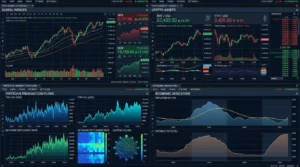
The website’s content is organized around several financial and business subjects. Some deal with daily market movements, while others explain concepts that remain useful over longer periods.
Stock Markets and Global Indexes
Stock market reporting is a significant part of FintechZoom’s coverage.
The website publishes material about major benchmarks, including the S&P 500, Nasdaq, Dow Jones Industrial Average, FTSE 100, and other international indexes.
These benchmarks measure different groups of publicly traded companies.
For example, the S&P 500 tracks 500 leading U.S. companies, while the Nasdaq-100 focuses on 100 of the largest nonfinancial companies listed on the Nasdaq Stock Market.
An index movement can indicate how a particular segment of the market performed, but it does not explain why every company moved.
FintechZoom’s articles attempt to provide additional context by discussing economic news, company developments, and broader market conditions.
Readers looking for a quick explanation of a financial headline may find this type of coverage useful.
Cryptocurrency and Blockchain
FintechZoom also reports on digital assets, including Bitcoin, Ethereum, and developments involving blockchain technology.
Articles discuss cryptocurrency prices, industry developments, investment products, and regulatory issues.
This subject attracts considerable attention because digital asset markets operate differently from traditional stock exchanges.
Cryptocurrency trading can continue throughout the week, and prices may change sharply over short periods.
For that reason, readers should distinguish news reporting from investment recommendations.
An article describing a Bitcoin price movement does not establish what the asset will do next.
Banking and Financial Technology
Financial technology, commonly called fintech, refers to technology used to deliver or improve financial services.
Examples include mobile banking, digital payment applications, online lending systems, and software that helps financial institutions manage transactions.
FintechZoom follows these developments through articles about banks, payment companies, regulatory changes, and emerging financial products.
This coverage may interest readers who want to understand why banking services are changing.
For instance, a story about digital payment infrastructure can help explain how businesses process transactions or why financial companies introduce new security requirements.
The value of this coverage lies in connecting technical developments with their financial implications.
Personal Finance and the Economy
Not every reader visits a finance website to research investments.
Some want information about mortgages, credit cards, borrowing costs, insurance, or household budgets.
FintechZoom includes articles on these practical subjects alongside coverage of inflation, interest rates, and economic conditions.
These topics are often connected.
A central bank’s interest rate decision, for example, can affect borrowing conditions, savings products, business financing, and financial markets.
A general explanation may help readers understand those relationships, although the terms of an actual loan or financial product must be checked with its provider.
How Does FintechZoom.com Work?

FintechZoom operates primarily like an online financial magazine with additional market information pages.
Readers visit the website, choose a subject, and open articles or reference pages related to that topic.
Its navigation organizes content into major categories such as Markets, World Indices, Business, Crypto, Money, and Economy.
The experience does not require someone to begin by connecting a brokerage account or depositing money.
For example, a visitor interested in technology stocks might open an article about the Nasdaq, follow related company coverage, and then review broader market reporting.
Someone researching cryptocurrency could instead explore Bitcoin-related news and explanations of blockchain technology.
FintechZoom also describes market reference pages that display information about indexes and commodities.
These pages provide another way to explore financial subjects without reading a full news article.
However, financial information websites can use different data providers and update schedules. Displayed figures should not automatically be treated as executable trading prices.
Does FintechZoom Provide Live Market Data?

FintechZoom publishes market-related pages covering assets such as gold, silver, oil, agricultural commodities, and major equity indexes.
The website labels some reference pages as live price pages, but its terms do not guarantee that every displayed figure is complete or current. Readers should check the relevant data source and timestamp before relying on a price.
A useful example is its coverage of gold.
A reader interested in gold prices may find a reference page alongside articles explaining how interest rates, currency movements, and market demand can influence the metal’s price.
This combination of data and explanation is one of the website’s practical features.
Still, the word live deserves attention.
Market data displayed on public websites may be delayed, indicative, or supplied through third-party feeds. The timing and accuracy can vary by asset, exchange, and provider.
Anyone placing a trade should therefore confirm current prices through their brokerage or another appropriate market-data source.
For general research, the website’s reference pages may provide useful background. For time-sensitive execution, they should not be the sole source.
Is FintechZoom a Trading Platform?
No. FintechZoom.com is a financial information website, not a service for directly buying and selling investments.
This distinction matters because its coverage includes stocks, cryptocurrency, exchange-traded funds, and other financial products.
A trading platform normally allows customers to create investment accounts, place orders, and manage financial positions.
Its website primarily presents financial news, market information, and educational content rather than offering conventional brokerage services.
FintechZoom’s website presents its primary purpose as publishing financial news, market information, and educational content. Its disclaimer also makes clear that its content is not personalized financial or investment advice. Readers should not confuse its financial coverage with the services offered by a brokerage or bank.
Visitors should therefore be cautious about third-party websites or messages that use a similar name to solicit deposits or promise investment returns.
Reading a financial article and transferring money to an investment service are very different activities.
How Useful Is FintechZoom for Beginners?
A financial publication can be valuable for beginners when it explains unfamiliar concepts instead of assuming readers already understand them.
FintechZoom publishes introductory material on financial markets, banking, investments, and economic topics.
Someone learning about stock indexes, for example, may benefit from understanding the difference between the Dow Jones and S&P 500 before trying to interpret daily market headlines.
Similarly, cryptocurrency articles may introduce terminology such as blockchain, stablecoins, and exchange-traded products.
The main limitation is that reading articles does not automatically provide a structured financial education.
Beginners may still need additional resources to develop a consistent understanding of risk, diversification, financial products, and market behavior.
For U.S. investment education, Investor.gov, operated by the Securities and Exchange Commission, provides official explanations of investment concepts and investor protection.
Using educational resources alongside financial reporting can make unfamiliar topics easier to understand.
Is FintechZoom.com Reliable?
FintechZoom.com is an operating financial publication with identifiable content sections, published articles, and publicly available website policies.
Its official pages describe its editorial purpose and clarify that the information it publishes is not personalized financial advice.
Those are useful details when evaluating the website, but they do not establish that every article or financial figure is independently verified.
Reliability should be considered at the article level.
A report discussing a company’s earnings should ideally refer to its official financial statements or announcements.
An article about interest rates should use information from the relevant central bank or other authoritative sources.
Likewise, a cryptocurrency report should distinguish confirmed regulatory developments from speculation.
Publication dates are particularly important because financial information can become outdated quickly.
A market article written months earlier may still provide historical context, but its prices and forecasts should not be treated as current.
FintechZoom can serve as one source of information, with significant financial claims checked against original records.
What Are the Limitations of FintechZoom?

The website covers a wide range of financial subjects, but broad coverage does not make it suitable for every financial task.
One limitation involves the difference between reporting and personalized advice.
A general article may explain how mortgages work, but it cannot determine whether a particular mortgage is affordable for a reader.
Similarly, an article discussing a stock cannot establish whether the investment fits someone’s financial position or risk tolerance.
Another limitation is the potential delay in market information.
Readers should verify price timestamps and data sources when accurate market figures matter.
Some older content may also contain product descriptions or market assumptions that no longer reflect current conditions.
Finally, FintechZoom’s coverage should not be confused with the services of a regulated broker, bank, or investment adviser.
Its primary role is to provide information, not to manage financial transactions for readers.
How to Use FintechZoom More Effectively
The best way to use FintechZoom depends on the question you are trying to answer.
If you want to understand a market event, start with the relevant reporting and identify the main factors discussed.
Then look for original announcements or market data that support the explanation.
For company-related news, official investor relations pages and regulatory filings can provide useful primary evidence.
For macroeconomic subjects, government statistical agencies and central banks are often better sources for original figures.
The same principle applies to cryptocurrency.
A news article can introduce a regulatory development, while an official regulator’s statement can confirm the exact requirements.
It also helps to distinguish an analysis piece from a news report.
A report may describe what happened, while analysis offers an interpretation of why it happened or what might follow.
Both can be useful, but they should not be treated as equally certain.
FintechZoom vs. Other Financial Information Websites
FintechZoom is one of several websites providing financial news and market information.
Other established services have different areas of emphasis.
| Website | Primary focus |
|---|---|
| FintechZoom.com | Financial news, market coverage, fintech, and explanatory articles |
| Yahoo Finance | Market quotes, financial news, company information, and portfolio features |
| Investopedia | Financial education, terminology, and investing explanations |
| MarketWatch | Financial news, market developments, and investing commentary |
| TradingView | Interactive charts, market analysis, and trading-related tools |
The comparison is not about identifying one universally better service.
A reader wanting to learn an unfamiliar financial term may prefer an educational resource.
Someone comparing company fundamentals may need detailed financial records, while an active trader may prioritize specialized market data and charting.
FintechZoom’s primary appeal is its combination of financial reporting and articles spanning several related subjects.
Conclusion
FintechZoom.com is a financial media website that brings together market reporting, cryptocurrency coverage, banking developments, and educational finance content.
Its value lies in making different areas of finance easier to explore from one publication.
Readers can use it to understand market developments and discover unfamiliar financial concepts, but important figures and claims still deserve independent verification.
For general financial research, FintechZoom can be a useful starting point. For investment decisions or trading activity, original data sources and appropriately qualified financial services remain essential.
FAQs
What is FintechZoom.com used for?
FintechZoom.com is used to read financial news, follow market developments, explore cryptocurrency topics, and learn about banking, business, and financial technology.
Is FintechZoom.com free?
The website provides publicly accessible articles and financial information pages. Its terms also refer to possible newsletter subscriptions, but the reviewed sources do not establish a required paid subscription for ordinary reading.
Can I buy stocks through FintechZoom?
No. FintechZoom.com operates as a financial publication rather than a brokerage service for executing stock trades.
Does FintechZoom cover Bitcoin?
Yes. The website publishes cryptocurrency coverage, including articles about Bitcoin, Ethereum, blockchain developments, and digital asset markets.
Is FintechZoom market data real-time?
The website describes certain reference pages as live, but data may be delayed or indicative. Verify important prices with an appropriate exchange or brokerage feed.
Is FintechZoom.com legitimate?
It is an operating financial publication with publicly available articles, policies, and an established website presence. However, readers should independently verify significant financial claims.
Does FintechZoom provide investment advice?
Its official disclaimer states that published material is for informational purposes and should not be considered financial or investment advice.
Who should use FintechZoom?
It may be useful for general readers, students, fintech professionals, and investors looking for financial news or introductory explanations. It is not a replacement for a broker or qualified financial adviser.
-

 Technology5 days ago
Troozer.com: What Is It and Can You Trust It?
-

 News1 week ago
Fintechzoom.io Nasdaq: The Future Of Financial Innovations
-

 Technology1 week ago
Drovenio Latest Technology News: The Future Of Next-Gen AI Innovations
-

 Home & Living1 week ago
Homecz: The Ultimate Guide to Modern Smart Home Living
-

 Games5 days ago
Freeze Nova Cloud Stream Free Games
-

 Technology2 days ago
SoSoActive: What It Is and What You Can Find on the Platform
-

 Entertainment5 days ago
How to Play Google Doodle Baseball Right Now
-

 Finance3 days ago
FintechZoom.com: What It Is, What It Covers, and How It Works