
Lifestyle
Ruschek Surname: Meaning, Origin, and Family History

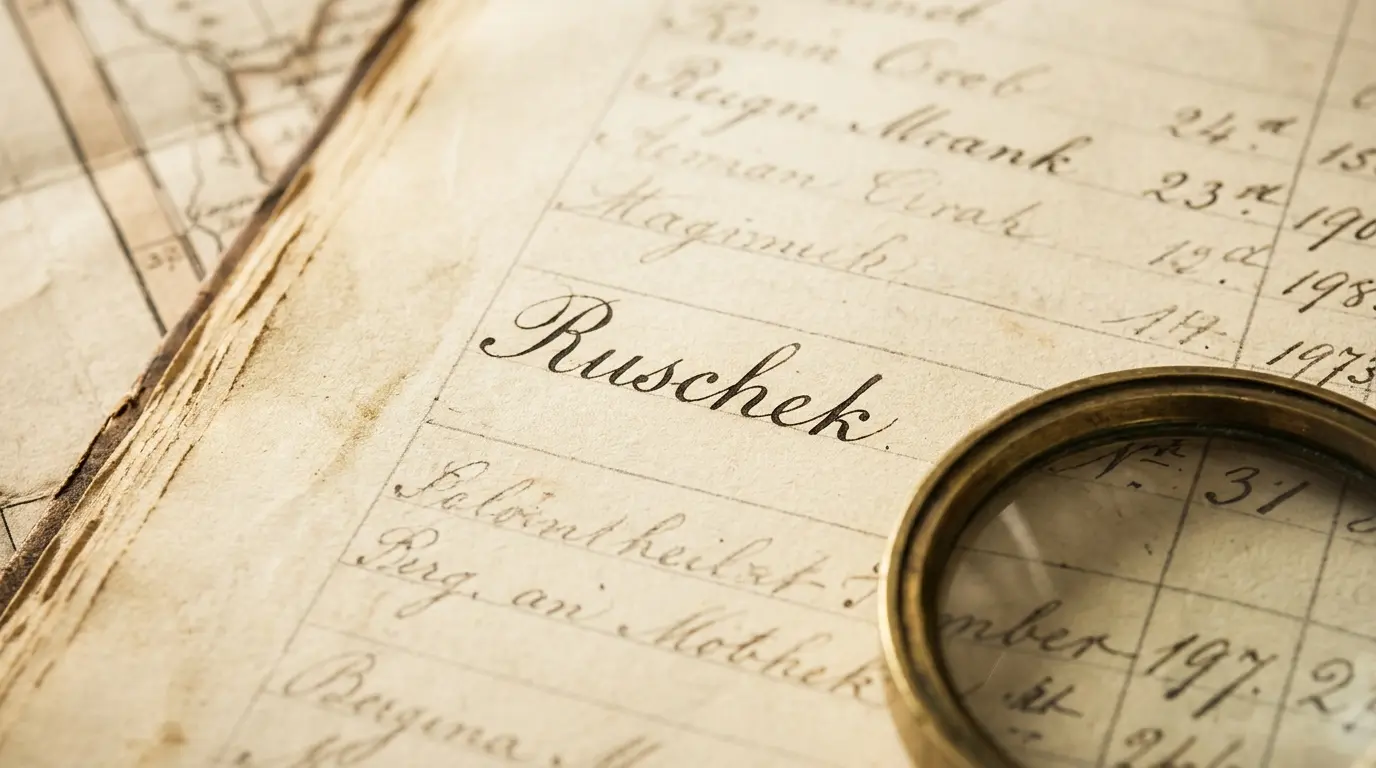
A surname can preserve a connection to an old place, a local landscape, or an earlier way of identifying a family. But understanding its meaning is different from tracing the people who carried it.
Ruschek appears in surname references and historical record indexes, which offer a more reliable starting point than interpreting the spelling alone.
FamilySearch’s indexed surname reference classifies Ruschek as German and associates it with residence near a reed bed. Historical record summaries also document people bearing the name in eighteenth- and nineteenth-century Europe.
These findings provide a starting point, but they do not establish a single birthplace, migration story, or common ancestor for every Ruschek family.
What Does Ruschek Mean?
The FamilySearch surname reference presents a topographic explanation for Ruschek, attributing its information to the Dictionary of American Family Names.
The entry connects the name with someone living near a reed bed and cross-references Rusch. It also mentions the spelling Rüscher.
A topographic surname describes an association with a landscape feature. In this interpretation, the identifying feature would have been an area where reeds grew.
That is more specific than saying the name simply means “nature” or “water.” It describes a possible relationship between a person’s residence and the surrounding land.
However, the wording should remain attributed to the reference. A surname explanation is a linguistic guide, not a record showing how a particular ancestor acquired the name.
Where Does the Ruschek Surname Come From?
The available surname reference points toward a German linguistic association. Historical records provide additional geographical context, but they answer a different question: where particular people were recorded.
For example, FamilySearch’s indexed results include Ruschek entries associated with Brandenburg, historical East Prussia, and Pomerania.
These locations help identify places where research could continue. They do not establish that the surname originated in any one of them.
A baptismal entry records an event in a particular community. The family may have lived there for generations, or the parents may have arrived from elsewhere.
Identifying an earlier home requires additional evidence, such as a marriage record naming a birthplace or a register documenting a move.
Taken together, these records support documented German and Central European connections, but they do not identify a single founding village or family.
What Historical Records Mention Ruschek?
Several indexed entries show the surname in identifiable historical settings.
The following examples come from FamilySearch’s discovery results:
Carl Friedrich Ruschek
-
Born: January 10, 1792
-
Baptized: January 16, 1792
-
Location: Brandenburg an der Havel
George Friedrich Wilhelm Ruschek
-
Born: March 11, 1793
-
Baptized: April 14, 1793
-
Location: Königsberg, historical East Prussia
Auguste Louise Wilhelmine Ruschek
-
Born: July 9, 1840
-
Christened: August 30, 1840
-
Location: Stettin, historical Pomerania
Anton Ruschek
-
Census: 1901 England and Wales
-
Birthplace recorded: Austria
-
Location: Shoreditch, London
These are database summaries rather than original documents independently examined for this article.
For someone researching a family connection, the next step would be to inspect the underlying record and its collection details.
An index is useful for locating evidence. It may omit information that appears in the original register, and transcription errors are possible.
These examples demonstrate historical use of the name. They should not be presented as the first people ever to bear it.
Are There Different Spellings of Ruschek?
Spelling deserves particular attention in family-history research.
The U.S. National Archives advises researchers to search surname variants and alternative forms of given names. It also warns that people with similar names should not automatically be treated as the same individual.
One useful research lead for Ruschek appears in a genealogical name index published by Degener.
The index lists both “Ruschek” and “Ruzek/Ruschek,” with references to pages in the associated volume.
That pairing is worth investigating. However, the index alone does not explain the relationship between the spellings.
The referenced text would need to be consulted before concluding whether it describes a name change, alternative spelling, or another connection.
The same principle applies to names such as Rusch and Rüscher. A surname reference may connect them linguistically, but a relationship between individual families requires records.
Does Everyone Named Ruschek Belong to the Same Family?
A shared surname is a clue, not a completed family tree.
To establish a relationship, researchers need evidence connecting people across generations. Matching names alone can produce mistakes, particularly when relatives reuse the same given names.
Dates, residences, occupations, spouses, and parents all help distinguish individuals.
For example, two records mentioning a person named Johann Ruschek may concern the same man. But if their ages, spouses, or places of residence conflict, the connection needs further investigation.
The U.S. National Archives recommends comparing details such as age, birthplace, and family composition when distinguishing people with similar names.
A reliable family history develops from a chain of supported relationships rather than a collection of matching search results.
How Can You Research Your Ruschek Family History?
Begin with a known person rather than an assumed surname origin.
A grandparent’s birthplace or a marriage certificate can give the research a clearer direction than a broad search for everyone named Ruschek.
Gather Existing Family Information
Start with documents already available within the family.
Useful material may include certificates, letters, photographs with captions, address books, and older family notes.
Record where each detail came from. A date written on a certificate and a date recalled in conversation are both useful, but they carry different kinds of evidence.
Work Backward Through Records
Identify the person’s parents, then look for records that confirm the relationship.
The aim is to establish each generation before moving to an earlier one.
A practical research table can keep the process organized:
-
Name: Exact spelling used in the document.
-
Event: Birth, baptism, marriage, census, or death.
-
Date and place: Details as recorded, including historical place names.
-
Relationships: Parents, spouse, children, or other named relatives.
-
Source: Archive, collection, record reference, and image number.
-
Uncertainty: Missing details, conflicting dates, or unclear handwriting.
This makes it easier to return to a source and explain why a connection was accepted.
Search Alternative Spellings Carefully
Try variations when an exact search fails, particularly where records suggest a spelling difference.
The National Archives’ genealogy catalog guide recommends searching full names, surnames alone, and alternative spellings.
Keep the spelling from each original document in your notes. Standardizing every occurrence too early can hide evidence about how a name was recorded.
Separate Family Trees From Historical Records
FamilySearch distinguishes historical records from community family-tree profiles in its search results.
A contributed tree may suggest a useful connection. Before adopting it, examine the records supporting that relationship.
An attractive family narrative should remain a research lead until the evidence supports it.
Why Can Online Accounts of Ruschek Differ?
Different sources may discuss different things under the same surname.
A linguistic reference attempts to explain a name’s derivation. A historical index identifies recorded individuals. A family tree proposes relationships. A modern directory may simply list someone currently using the name.
Those sources should not be combined as though they all establish the same claim.
Database totals also need care. A search-result count is not a count of living surname bearers: one individual may appear in multiple records, and a search may include broader matches.
For that reason, this article does not assign Ruschek an exact worldwide population or a definitive rarity ranking.
More useful clues come from identifiable records, documented locations, and family relationships that can be verified.
Conclusion
Ruschek is a documented surname with German and Central European connections. FamilySearch presents a landscape-based interpretation, while historical indexes provide specific people and places for further investigation.
The name’s general meaning and an individual family’s ancestry remain separate questions. For anyone tracing Ruschek relatives, the strongest starting point is a known ancestor and a sequence of records linking that person to earlier generations.
FAQs
What does Ruschek mean?
FamilySearch’s surname reference associates it with someone living near a reed bed. This is an attributed linguistic explanation rather than proof of every family’s origin.
Is Ruschek a German surname?
The cited reference classifies it as German. That classification does not determine the nationality or ancestry of every person carrying the name.
How old is the Ruschek surname?
The reviewed indexed records include eighteenth-century examples. They do not establish when the surname first developed.
Are Ruschek and Ruzek the same surname?
A genealogical index pairs the spellings, providing a research lead. Their relationship in a particular family needs supporting records.
Does the surname prove that two people are related?
No. Establishing kinship requires evidence connecting the individuals through family relationships.
What is the best way to research Ruschek ancestry?
Begin with a known relative, collect supporting documents, and work backward one generation at a time. Check original records wherever available.
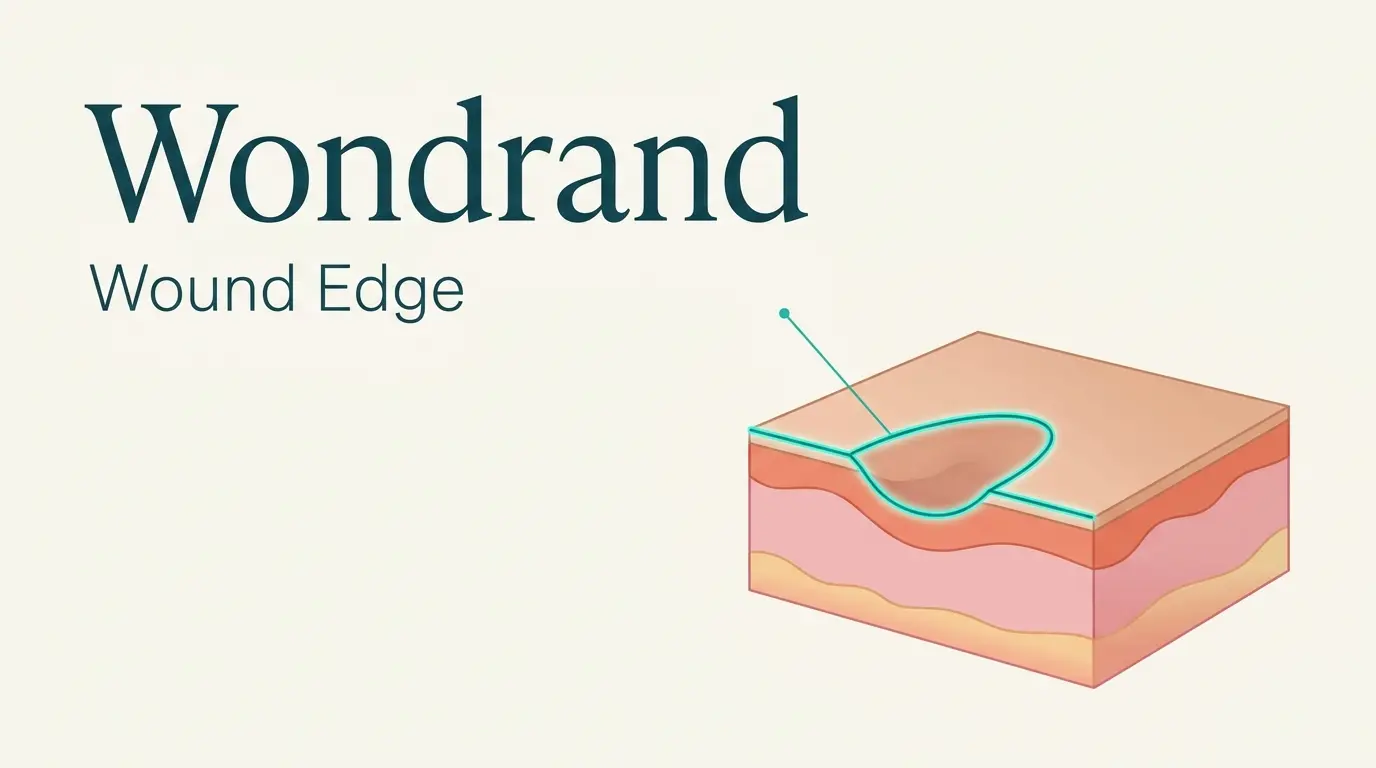
The word wondrand may look unfamiliar in English, but its meaning is straightforward in Dutch: the edge or margin of a wound.
You might encounter it in a nursing textbook, a wound assessment form, or a Dutch medical report. It identifies a particular part of the wound rather than a disease, treatment, or stage of healing.
Dutch clinical documentation uses the term when describing the condition of a wound’s borders. The Dutch healthcare information model for wounds includes a specific field for recording that condition.
Understanding the word therefore involves both a simple translation and some context about how healthcare professionals use it.
What Does Wondrand Mean?
Wondrand means “wound edge” or “wound margin.”
It refers to the border where the wound meets the adjacent skin. In a small cut, it refers to the margins along the injury. In a larger open wound, it describes the border between the wound and the surrounding skin.
The term names a location. It does not, by itself, say whether that location is healthy, irritated, infected, or healing.
That information comes from the surrounding description.
A medical note may discuss the wound edge separately from the wound’s depth, fluid, or tissue appearance. Dutch wound-classification documentation includes distinct fields for these observations.
For someone translating a report, this distinction matters: wondrand is not another word for the whole wound.
The Dutch Origin of Wondrand
Wondrand combines two Dutch nouns:
| Dutch word | English meaning |
|---|---|
| Wond | Wound |
| Rand | Edge, border, or rim |
| Wondrand | Wound edge or wound margin |
The Algemeen Nederlands Woordenboek, published by the Dutch Language Institute, describes wond as an injury involving separation or damage to skin or underlying tissue. Its entry for rand includes the sense of a boundary or border.
The compound’s construction makes its medical meaning understandable: it names the edge of the wound.
The plural is wondranden, meaning “wound edges.” This plural form appears in Dutch clinical classification materials.
The sources reviewed establish its language and clinical use, but they do not establish a first recorded use or a person who coined it.
How Is Wondrand Used in Medical Documentation?
Healthcare professionals describe different wound features so they can record findings and compare changes over time.
The wound edge is one of those features.
Dutch clinical materials include descriptions such as intact edges, maceration, eczema-like changes, and undermining. These are observations about tissue condition rather than interchangeable names for the same problem.
For example, a note containing wondrand might describe whether the border remains intact or whether moisture has affected the skin.
The wording needs to be interpreted alongside the rest of the assessment. A single adjective cannot explain the wound’s cause or determine the appropriate treatment.
This is similar to other medical terminology: identifying the body area being described is only the first step toward understanding the full note.
Examples of the Word in Context
The following are illustrative translations, not quotations from patient records:
| Dutch phrase | English translation |
|---|---|
| Beoordeling van de wondrand | Assessment of the wound edge |
| De wondranden zijn intact | The wound edges are intact |
| Maceratie van de wondrand | Maceration of the wound edge |
| Ondermijning van de wondrand | Undermining of the wound edge |
These examples show why translating the complete phrase is more useful than translating the noun alone.
Why Does the Wound Edge Matter?
The border of a wound is relevant to how new skin covers the injured area.
WCS, the Dutch wound-care knowledge organization, describes epithelialization from wound edges as part of healing. Epithelialization is the formation of a new surface layer of skin cells over the wound.
The condition of the edge can therefore help clinicians assess whether healing is progressing or encountering difficulties.
However, the edge is only one part of the picture.
WCS materials also discuss tissue condition, infection, moisture, and underlying patient factors. Problems such as inadequate oxygen supply, infection, drying, and repeated dressing trauma can interfere with epithelial advancement.
A wound should not be judged from its border alone. Its appearance needs to be considered with the history, symptoms, and broader clinical assessment.
Wondrand in the TIME Assessment Framework
Wondrand appears in Dutch explanations of the TIME framework, which organizes several aspects of wound assessment.
A nursing course from Karel de Grote University of Applied Sciences and Arts presents the framework as follows:
| Letter | Assessment area | General focus |
|---|---|---|
| T | Tissue | The tissue present in the wound |
| I | Infection or inflammation | Signs relevant to infection and inflammatory processes |
| M | Moisture | The wound’s moisture and fluid balance |
| E | Edge | The condition of the wound edges and surrounding area |
The I component is described as “Infection” in some sources and “Inflammation/Infection” in others.
Its explanation of E includes intactness, maceration, eczema-like changes, and undermining.
The framework helps organize observations. It is not a diagnosis, and its categories do not automatically prescribe a particular dressing or procedure.
For an English-speaking reader, the main connection is simple: wondrand corresponds to the “edge” component.
Wondrand, Wound Bed, and Surrounding Skin
Several nearby terms can become confusing when translated without context.
The wound edge, wound bed, and surrounding skin describe different areas.
| Area | What it describes |
|---|---|
| Wound bed | The exposed tissue within an open wound |
| Wound edge | The border between the wound and adjacent skin |
| Surrounding or periwound skin | The skin around the wound |
Clinical assessment guidance distinguishes these areas because each can show different findings. Mölnlycke’s Dutch-language assessment material, for example, separates wound-bed tissue, edge changes, and the condition of surrounding skin.
A report describing irritation around a wound is therefore not necessarily describing the tissue inside it.
Keeping those locations separate makes a translation more precise and helps avoid turning one observation into a claim about the entire injury.
What Do Maceration and Undermining Mean?
These terms may appear alongside wondrand in wound-care materials.
Maceration
Maceration means softening or breakdown of tissue associated with excessive moisture.
WCS guidance identifies excess fluid as a cause of maceration at the wound margin and distinguishes it from the controlled moisture conditions used to support healing.
The important distinction is balance. A wound-care plan may aim to maintain an appropriate moist environment while protecting tissue from excess fluid.
The word maceratie in a Dutch note describes an observation. It does not tell a reader which product to apply.
Undermining
Undermining describes tissue loss extending beneath an overlying wound edge. The wound may therefore extend farther under the skin than its visible opening suggests.
Clinical assessment materials specifically include checking wound edges for undermining.
This requires professional assessment. A patient should not try to explore beneath a wound edge to interpret the term.
How to Understand Wondrand in Your Medical Report
Start with the complete sentence and the heading under which it appears.
Is the report recording the wound’s appearance? Describing a change since the previous visit? Explaining a care plan?
Keep three questions separate:
- Location: Which part of the wound is being discussed?
- Observation: What did the clinician find?
- Plan: What action, if any, was recommended?
For example, translating “maceration of the wound edge” identifies a tissue finding. It does not establish the cause of the wound or whether infection is present.
If the wording affects your care, ask the treating professional to explain the finding and its significance. Treatment should follow the assessment rather than a translation of one term.
Seek prompt medical advice if a wound becomes increasingly painful, swollen, or red, produces pus, or is accompanied by fever or feeling unwell. Heavy or uncontrolled bleeding, or a very deep wound, requires urgent medical assessment.
These warning signs are consistent with NHS guidance on cuts and grazes.
Conclusion
Wondrand is a Dutch medical term meaning wound edge. It identifies the border of an injury and appears in assessments describing tissue condition and healing.
Its translation is simple, but its clinical significance depends on the accompanying description. Understanding the whole note—and distinguishing the wound edge from the wound bed and surrounding skin—provides a much clearer picture than interpreting the word in isolation.
FAQs
What does wondrand mean in English?
It means “wound edge” or “wound margin.”
Is wondrand a Dutch word?
Yes. It combines the Dutch words wond, meaning wound, and rand, meaning edge or border.
What is the plural of wondrand?
The plural is wondranden, meaning wound edges.
Does wondrand mean an infected wound?
No. It names a part of the wound. Infection is a separate clinical finding.
Is wondrand the same as a scar?
No. Wondrand refers to a wound’s edge, rather than the scar that may remain after healing.
What does wondrand mean in the TIME framework?
It corresponds to E: Edge, the assessment of wound-edge condition.
Does the word tell me how to treat a wound?
No. Treatment depends on the wound’s cause, condition, symptoms, and professional assessment.

That is the kind of situation where incredorable makes sense.
Incredorable is an informal blend of “incredible” and “adorable,” used to describe something exceptionally cute or endearing. It adds a touch of exaggeration to an affectionate reaction.
The spelling may look unfamiliar, but the idea is easy to recognize. The more interesting questions are whether it counts as a real word, where it came from, and when it works better than simply saying “adorable.”
What Does Incredorable Mean?
Incredorable expresses a strong reaction to something cute, lovable, or charming.
Think of it as a playful way to say that ordinary praise does not feel quite enthusiastic enough.
For example:
“The puppy tried to carry a slipper bigger than its head. It was incredorable.”
Here, the word communicates affection and amusement. The puppy’s behavior is endearing, and the invented-sounding adjective makes the description more expressive.
It works differently from a neutral observation. Calling something small describes its size. Calling it incredorable tells the reader how the speaker feels about it.
The context usually supplies the meaning. A photograph, a short story, or a description of a sweet gesture can make the word understandable even to someone encountering it for the first time.
Is Incredorable a Real Word?
Incredorable has documented published use, so it is more than a hypothetical combination of letters. However, it is best treated as an informal coined expression rather than assumed to be standard vocabulary.
A dedicated entry did not surface in the Cambridge and Merriam-Webster searches conducted for this article. That finding does not establish that the expression is absent from every dictionary.
There are two separate questions here.
The first is whether a word communicates a recognizable meaning. Incredorable can do that when the context is playful and affectionate.
The second is whether readers can be expected to recognize it without explanation. That is less certain.
Compare these sentences:
“The children made an adorable paper village.”
“The children made an incredorable paper village.”
Both communicate a positive reaction, but the second draws attention to the writer’s word choice. It sounds more personal, exaggerated, and deliberately playful.
That can be an advantage in a caption. In a formal description, the familiar word may be clearer.
How Is the Word Formed?
Incredorable can be understood as a word blend, also called a portmanteau.
A portmanteau combines elements of existing words to create a new expression. Collins Dictionary gives “smog,” formed from “smoke” and “fog,” as an example.
Incredorable follows a similar construction:
Incredible + adorable → incredorable
The spelling and meaning suggest a blend of “incredible” and “adorable,” combining a sense of emphasis with the idea of affection or cuteness.
That recognizable structure helps explain why the expression can make sense without a lengthy definition.
However, a transparent construction does not guarantee that everyone will understand it immediately. Readers may initially interpret an unfamiliar blend as a spelling mistake.
A little context usually resolves that problem.
Where Does Incredorable Come From?
A Star Tribune column by James Lileks documented the expression on May 16, 2017.
This is evidence of an earlier published appearance, rather than proof of its first use.
The original creator was not established in this research. It would therefore be inaccurate to say that Lileks invented the word or that it originated on that publication date.
Word histories can be difficult to trace, particularly when an expression is easy for different people to invent independently.
Two speakers could combine the same familiar words without knowing that someone else had already done so. A dated reference helps establish a timeline, but it does not necessarily identify a single point of origin.
How Do You Use Incredorable in a Sentence?
Incredorable works as an adjective. You can place it before a noun or after a linking verb such as “is,” “looks,” or “seems.”
The following examples are original illustrations of possible usage.
Describing Animals
Animals provide an easy context because the intended affectionate meaning is clear.
“An incredorable little rabbit appeared from behind the flowerpot.”
“Your dog looks incredorable in that oversized raincoat.”
The word adds enthusiasm without requiring a detailed explanation.
It is especially suited to a lighthearted description of an animal’s expression, movement, or behavior.
Describing Objects and Handmade Gifts
The expression can also describe something designed to look charming.
“She made an incredorable clay house with a tiny yellow door.”
“These miniature knitted vegetables are incredorable.”
In these examples, the speaker is responding to the object’s appearance and character. The word would be less informative in a technical product description, where materials, dimensions, and function matter more.
Describing a Gesture or Moment
Something does not have to be physically cute to invite an affectionate response.
“He saved a seat for his teddy bear. The whole scene was incredorable.”
“Her handmade invitation was incredorable, with its tiny illustrations and playful details.”
Here, the expression responds to the feeling created by the moment.
Use judgment when describing people, though. A playful compliment that feels warm between friends could sound overly familiar or patronizing in a professional setting.
Incredorable vs. Incredible vs. Adorable
These words share parts of their spelling, but they are not interchangeable.
Cambridge Dictionary defines “incredible” in terms that include being difficult to believe. Its entry for “adorable” describes someone or something that inspires liking or affection.
The distinction becomes clearer through examples:
| Word | Main idea | Original example |
|---|---|---|
| Incredible | Disbelief or strong admiration | “It seemed incredible that nobody had noticed the missing roof.” |
| Adorable | Cuteness or affection | “The puppy has an adorable sleepy expression.” |
| Incredorable | Playful emphasis on cuteness | “That sleepy puppy tucked inside a blanket is incredorable.” |
An engineering achievement might be incredible without being adorable.
A small toy might be adorable without being surprising.
Incredorable is most useful when the writer wants an affectionate description with extra personality.
When Should You Avoid Using It?
The main consideration is whether the word serves the reader.
For a friendly message, a playful caption, or an informal story, unusual wording can be part of the appeal. For a business report or academic paper, it may distract from the point.
Consider the difference:
“The display includes handmade figures.”
“The display includes small handmade animal figures.”
The first communicates enthusiasm. The second explains what visitors will see.
Neither sentence is automatically better. They perform different jobs.
If you need clarity, choose a familiar alternative such as:
- Adorable
- Endearing
- Charming
- Delightful
- Exceptionally cute
“Incredibly adorable” is also available when you want emphasis without using a blended word.
Conclusion
Incredorable is a playful expression for something that inspires an especially affectionate reaction. Its recognizable word parts make it useful for lighthearted descriptions, personal messages, and imaginative captions.
Its informal character is part of its effect. Use it when personality helps the sentence, and choose a familiar alternative when precision matters more.
FAQs
What does incredorable mean in simple English?
It means exceptionally cute or endearing, with a playful sense of extra enthusiasm.
Is incredorable a spelling mistake?
It can be intentional wordplay. If the surrounding sentence concerns something cute or affectionate, that interpretation is more likely than an accidental misspelling.
Is incredorable in the dictionary?
A dedicated entry was not confirmed in the Cambridge and Merriam-Webster searches conducted for this article. It should be treated as an informal expression rather than assumed to be standard dictionary vocabulary.
Who invented incredorable?
Its original creator was not established. A published appearance does not, by itself, identify the person who first formed the word.
Can incredorable describe a person?
It can function as a playful compliment, but the relationship and context matter. Avoid it where an overly familiar description could feel uncomfortable or patronizing.
Can I use incredorable in formal writing?
A familiar alternative is usually clearer. Reserve it for writing where a deliberately playful voice is appropriate.

Casance is one of those words that becomes more confusing the longer you search for it. One website describes it as a mindset for adapting to change. Another connects it to business consulting, while other results mention architecture, locksmithing equipment, or language.
The problem is that these explanations are not describing one established concept.
Casance does not have a widely recognized English definition. Instead, the name appears in several unrelated contexts, some supported by official records and others found mainly in recent online articles.
Two uses are particularly well documented: Casance One SL, a company registered in Spain, and CasAnce, an architectural design competition organized in Italy.
Understanding the difference between these uses is more helpful than trying to force them into a single meaning.
This guide is part of YippoLabs‘ collection of everyday knowledge and informative explainers.
What Does Casance Mean?
Casance is not a standard English term with one clearly established definition.
Unlike words that have recognized meanings across dictionaries and professional fields, its interpretation depends on where it appears.
For example, the name of a registered company does not automatically become a dictionary word. Similarly, a project title may be meaningful within an organization without representing a general concept.
This distinction explains why different articles give different answers.
Some discuss Casance as a philosophy of flexibility and adaptation. Others treat it as a technical product name or an architectural reference.
Before accepting any definition, it helps to identify the original context.
| Context | What Casance may refer to |
|---|---|
| Business | Casance One SL, a Spanish company |
| Architecture | CasAnce, an Italian design competition |
| Personal development | An informal concept involving planning and adaptability |
| Locksmithing | A reported name for a specialized key-holding fixture |
| Language | Possible confusion with the Hausa word kasance |
These uses should not be assumed to have the same origin or owner.
Casance as a Business Name
One of the clearest documented uses of the word is Casance One SL.
This is a company recorded in Spain’s official business registry.
According to the Boletín Oficial del Registro Mercantil, the company began operations on December 30, 2015, and its incorporation was published in the February 5, 2016 registry record.
The company’s stated activities included importing and exporting products and providing business management services to entrepreneurs and companies.
That provides a concrete explanation for someone who encounters Casance in a Spanish business document.
However, the company registration does not establish that Casance is a general business methodology, digital platform, or software product.
It is simply evidence that the word has been used as part of a registered business name.
The company also appears in later official registry records, including an August 2024 filing involving the appointment of an authorized representative.
These records establish a documented corporate use of the name, not the origin of every other use appearing online.
What Is CasAnce in Architecture?
CasAnce is also the name of a documented Italian architectural design competition.
The competition was organized by ANCE, the Italian association of construction companies, in collaboration with the National Institute of Architecture, IN/Arch.
Its purpose was to redesign an existing property in Rome for institutional accommodation and representation.
The official IN/Arch competition announcement provides the design brief, eligibility requirements, project objectives, and competition documentation.
The project involved renovating an apartment of approximately 130 square meters, together with a terrace of approximately 132 square meters.
Participants were asked to rethink the internal layout, exterior spaces, landscaping, and material finishes while respecting the building’s architectural constraints.
The competition was intended for architects and engineers younger than 35.
This is a particularly useful example because the name is supported by the organization responsible for the competition.
Who Won the CasAnce Competition?
The competition produced a documented winning proposal.
According to IN/Arch’s published results, Paros Architettura won with a project titled Casa della materia.
The winning proposal was selected for its functional qualities and relationship with the surrounding urban context.
Paros Architettura was founded by Eugenia Rolando and Federico Patacchiola.
These official records confirm that is a genuine project name in architecture.
They do not establish that the word has a broader architectural definition outside this competition.
Why Do Some Websites Describe Casance as a Mindset?
Another interpretation appears in online articles about productivity and personal development.
In this context, Casance is sometimes described as the space between a person’s plans and what happens in reality.
The idea is that people can benefit from adjusting their actions when circumstances change instead of following an inflexible plan.
For example, a small-business owner might prepare a product launch and then discover that a supplier cannot deliver on time.
Rather than abandoning the project completely, the owner could adjust the schedule, find alternatives, or change the launch strategy.
That is a practical example of adaptability.
Some writers use Casance as a label for this kind of thinking.
However, the underlying idea is not new, and the name has not been established as a formal psychological theory or scientifically validated productivity framework.
No recognized academic model, professional certification, or established research program has been confirmed under the name.
Readers can appreciate the general idea of flexibility without assuming that represents a newly discovered scientific principle.
Is Casance a Technology or Productivity System?
Some explanations extend the personal-development interpretation into the business and technology sectors.
They suggest that Casance involves efficient workflows, adaptable planning, risk management, or balancing structure with creativity.
These descriptions can sound similar to established management ideas.
Businesses already use approaches such as agile project management, contingency planning, and iterative development to respond to changing requirements.
However, a similarity in language does not prove that Casance is an established business framework.
A genuine professional method normally has identifiable documentation explaining its principles, implementation, and limitations.
If it is a software product, readers should be able to find the provider, product documentation, and a functioning service.
The available information does not establish a single Casance-branded technology platform providing these features.
Consequently, claims about Casance as a digital productivity system should be treated as informal interpretations unless tied to a specific documented product.
Does Casance Refer to a Locksmithing Tool?
A November 2026 article published by Tozy Magazine describes Casance as a holding fixture or clamp used to secure certain key blanks during machining, specifically for certain manual vertical milling machines.
In locksmithing, precise positioning matters because an incorrectly aligned key blank may produce a poor duplicate.
Specialized clamps and vises are real accessories used with compatible key-cutting machines.
A November 2026 guide from Tozy Magazine describes a fixture intended for certain manual vertical milling machines.
However, that description is not the same as a verified manufacturer specification.
The available supporting information does not independently establish a particular manufacturer, standardized model, or official product documentation for a Casance-branded accessory.
Anyone considering such equipment should therefore confirm the exact product identification, supported machines, dimensions, and seller information.
It would be misleading to describe as a universally recognized locksmithing tool without that evidence.
Could Casance Be a Misspelling of Kasance?
There is also a possible linguistic connection worth considering.
The Hausa language uses the word kasance, which can mean becoming, occurring, or happening, depending on the sentence.
The HausaDictionary entry for kasance records uses involving becoming and occurring.
Because Casance and kasance have similar spellings, people searching for a word they heard spoken may confuse them.
That possibility does not establish that the two words share an origin.
The standard Hausa spelling is kasance, and the meaning should be interpreted within Hausa grammar rather than assigned automatically to the English-looking word Casance.
If the term appeared in a Nigerian or Hausa-language conversation, checking the original sentence may be more useful than searching for general articles about Casance.
Is Casance the Same as Casamance?
No.
Casamance is an established geographic name referring to a region in southern Senegal.
It is associated with the Casamance River and the surrounding area’s geography, history, and culture.
Casance is a different spelling.
The similarity could cause confusion in search results or informal writing, but there is no reason to assume that every reference to concerns Senegal.
The same caution applies to other similarly spelled business names and brands.
Small spelling differences can identify completely unrelated subjects.
Why Does Casance Have So Many Online Explanations?
Unfamiliar words often attract articles that attempt to explain them.
When a term has no widely accepted definition, different writers may interpret it according to the subjects they normally cover.
A lifestyle website might discuss as a philosophy. A business publication might connect it to adaptability or operations. A technical article might identify it as equipment.
Once those explanations appear in search results, later articles may repeat them.
This can create the impression that the term has several well-established meanings, even when the supporting evidence is limited.
The issue is not simply that different definitions exist.
Language regularly develops new meanings.
The issue is whether those meanings can be traced to documented use by people, organizations, or communities.
An official business registration carries different evidentiary weight from an article proposing an abstract interpretation.
A named architectural competition with published results is also stronger evidence than a general claim about an undocumented design philosophy.
How to Identify Which Casance Someone Means
The simplest method is to look at the surrounding subject.
If the term appears in a Spanish corporate record, the relevant reference may be One SL.
If it appears in an Italian architectural portfolio, competition announcement, or renovation project, CasAnce is a more likely interpretation.
If the discussion concerns productivity, adaptability, or self-improvement, the writer may be using Casance as an informal conceptual label.
For key-cutting equipment, a product number and manufacturer documentation would be needed to determine the precise item.
Language-related uses should be checked against the original language and spelling.
This context-first approach avoids assuming that unrelated uses form part of one larger movement or business.
Is Casance a Legitimate Concept?
The answer depends on what someone means by legitimate.
Casance is demonstrably used in documented names, including a Spanish business and an Italian architectural competition.
Those are genuine, independently traceable uses.
The term also appears in online discussions about adaptability and productivity.
However, that does not establish the associated self-improvement explanation as a formally recognized discipline.
A concept can be useful as a metaphor without being scientifically validated.
Likewise, a company or project can use an unusual name without giving that name a universal dictionary meaning.
The most accurate conclusion is that has identifiable uses, but no single accepted definition encompassing all of them.
Conclusion
Casance is not one clearly defined concept. Its meaning depends on where the term appears.
Official records establish its use in the name of a Spanish company and an Italian architectural competition. Other descriptions connect it with productivity, adaptable thinking, and specialized tools, but those interpretations require more careful qualification.
For anyone researching Casance, the most reliable starting point is the context in which the word was used.
Identifying the relevant company, project, language, or product is far more useful than accepting a universal definition that the available evidence does not support.
Frequently Asked Questions
What does Casance mean?
Casance has no single widely established English meaning. It appears as a business name, an architectural competition title, and an informal term in various online discussions.
Is Casance a real word?
Casance is used as a name in documented contexts, but it is not established as an ordinary English word with one standard dictionary definition.
Is Casance a company?
Casance One SL is a company documented in Spain’s official business registry. This does not establish a relationship with every other use of the name.
What is CasAnce in architecture?
CasAnce was an Italian design competition organized by ANCE and IN/Arch to renovate a property in Rome for institutional use.
Is Casance a productivity method?
Some online articles describe it as a mindset involving adaptability. However, it has not been independently established as a scientifically validated productivity method.
Is Casance a locksmithing product?
Some articles describe a key-holding fixture using the name, but manufacturer documentation and exact product identity have not been independently confirmed.
Is Casance related to the Hausa language?
The Hausa word kasance has meanings related to becoming, occurring, or happening, depending on the sentence. A direct etymological connection has not been demonstrated.
Does Casance have one official website?
There is no verified single organization or website that represents all uses of the name.
-

 Technology1 week ago
Troozer.com: What Is It and Can You Trust It?
-

 News2 weeks ago
Fintechzoom.io Nasdaq: The Future Of Financial Innovations
-

 Technology2 weeks ago
Drovenio Latest Technology News: The Future Of Next-Gen AI Innovations
-

 Home & Living2 weeks ago
Homecz: The Ultimate Guide to Modern Smart Home Living
-
 Technology7 days ago
SoSoActive: What It Is and What You Can Find on the Platform
-

 News6 days ago
Newslikeyou.com: What It Is, What It Covers, and Its Content Services
-

 Finance1 week ago
FintechZoom.com: What It Is, What It Covers, and How It Works
-

 Technology1 week ago
Cyanová: What It Means and How It’s Used in Modern Design