
Education
Ciulioneros: Meaning, Origin and Connection to Culioneros

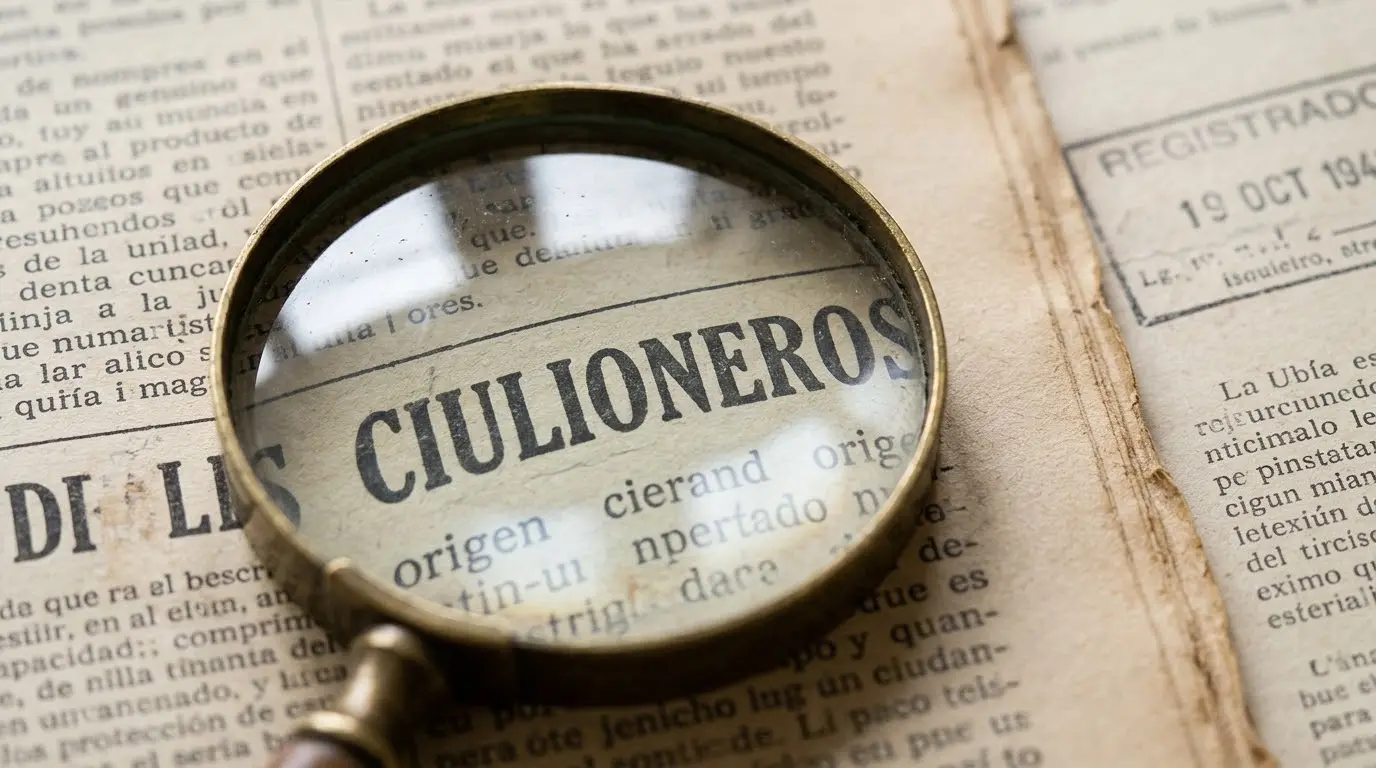
Searching for Ciulioneros brings up different explanations. Some websites describe it as slang or a cultural identity, but the exact spelling has no clearly established meaning in the sources reviewed.
A more substantial historical record exists for a similar name: Culioneros. Trademark documentation and Colombian reporting connect that spelling to Spanish-language adult entertainment. Ciulioneros may be a misspelling or altered version, but a direct connection has not been established.
Understanding this distinction is essential to separating documented history from online speculation.
What Does Ciulioneros Mean?
A reliable English translation for the exact spelling Ciulioneros was not established during this research.
Online explanations use the term in different ways, including as slang or a group identity. However, the sources reviewed do not provide dated examples or independent linguistic evidence establishing either interpretation.
This matters because an article about a word is different from evidence showing how people actually use it.
For example, a slang explanation is stronger when it includes dated conversations or identifiable speakers using the expression with the same meaning. A historical explanation needs sources connecting the name to a place, period, or community.
For Ciulioneros, that supporting trail remains limited.
The most useful approach is to examine where the spelling appears and whether the surrounding discussion points toward another name.
How Is Ciulioneros Connected to Culioneros?
The spelling difference is small:
| Spelling | Distinguishing feature | What the research establishes |
|---|---|---|
| Ciulioneros | Includes an additional i after the initial C | Appears in online explanations, with an uncertain independent meaning |
| Culioneros | Does not include that additional letter | Appears in trademark documentation and historical reporting |
The similarity makes a typing error or deliberate respelling plausible.
However, similarity alone cannot explain who introduced the additional letter, when it appeared, or whether every person using it intended the same reference.
The stronger finding concerns Culioneros. An official U.S. trademark publication documents that exact name, while Colombian newspaper reporting connects it to adult entertainment.
Those sources provide background for the possible connection. They do not establish that Ciulioneros was an authorized alternative spelling.
What Do Trademark Records Reveal About Culioneros?
The United States Patent and Trademark Office’s August 14, 2012 Official Gazette lists CULIONEROS under application serial number 85601858, published for opposition.
The entry records an April 18, 2012 filing and describes entertainment services involving a website with adult-oriented material. It also gives the translation “ladies’ men.”
That translation needs context.
It is the translation recorded for a particular commercial mark. It should not automatically be presented as a universal dictionary definition or transferred to the different spelling Ciulioneros.
The trademark was registered on October 30, 2012, under registration number 4234165.
The trademark record lists April 26, 2011, as the claimed date of first use anywhere and December 31, 2011, as the claimed date of first use in commerce. These are dates supplied in the application, not independent proof of when the name was originally created.
The distinction is straightforward: trademark documentation can establish a commercial naming history without settling the complete linguistic history of a word.
What Is the Connection to Colombia?
A March 17, 2016 report by Colombian newspaper El Espectador discussed the country’s adult-production industry.
The report specifically identifies Culioneros as BangBros’ Spanish-language operation and describes production involving Colombian locations and local expressions.
The report specifically identifies Culioneros as BangBros’ Spanish-language operation and describes production involving Colombian locations and local expressions.
It does not establish that Ciulioneros originated in Colombia.
Nor does a company’s use of local settings and language make its name an ethnic identity, traditional community, or historical cultural category.
These are separate questions requiring different evidence.
The newspaper report supports a specific account of the Culioneros business name. Its findings should remain attached to that spelling and context.
Where Did the Ciulioneros Spelling Originate?
The exact origin was not established.
A typing mistake, intentional variation, or independently created name could explain an unfamiliar spelling. Without dated evidence connecting its appearances, choosing one explanation would be speculative.
That theory should therefore remain unconfirmed.
A plausible story is not the same as a documented origin.
For now, the evidence supports describing Ciulioneros as an uncertain online spelling with a possible connection to an established commercial name.
Is Ciulioneros a Cultural or Historical Group?
The sources reviewed do not establish Ciulioneros as the name of an Indigenous people, historical community, or recognized cultural tradition.
That is a finding about the available evidence, rather than a claim that every possible use of the word has been examined.
A credible cultural history would normally identify the people involved, the relevant location, historical sources, and evidence from the community itself.
Descriptions of customs, clothing, food, or celebrations need that foundation.
Without it, adding colorful details can create the appearance of a history that has not been demonstrated.
Readers should be especially careful when an article provides a detailed cultural narrative but no traceable sources for the central claim.
How Should You Interpret the Term Online?
Begin with the exact spelling and surrounding context.
If a discussion concerns the documented entertainment name, Culioneros may be the intended reference. If Ciulioneros appears as a username or invented label, its meaning may depend on that particular user.
Neither situation establishes a standard translation.
Three checks can help:
-
Match the spelling: Make sure a source actually discusses Ciulioneros rather than Culioneros.
-
Identify the evidence: A dated record or original statement is more informative than an unsupported definition.
-
Separate naming from meaning: A trademark, username, or business name is not automatically everyday vocabulary.
Because of the documented adult-entertainment association of the similar name, avoid assuming that Ciulioneros is a neutral compliment or harmless cultural label. Clarify the intended meaning before using it publicly.
Conclusion
Ciulioneros remains an online spelling without a verified independent definition or documented origin. Its resemblance to Culioneros makes a connection possible, but the available evidence does not establish that the two names are officially interchangeable.
Trademark records and Colombian reporting provide a historical trail for Culioneros. Until comparable evidence emerges for Ciulioneros, the two spellings should be treated separately.
FAQs
What does Ciulioneros mean in English?
A reliable English translation for the exact spelling was not established. The translation recorded for Culioneros should not automatically be applied to it.
Is Ciulioneros a Spanish word?
The research did not establish it as standard Spanish vocabulary. Its appearance alone is insufficient to prove its language or derivation.
Are Ciulioneros and Culioneros the same?
They are different spellings. A misspelling or altered-name connection is plausible but has not been conclusively documented.
What does Culioneros refer to?
Historical reporting and trademark records document it as a commercial name associated with Spanish-language adult entertainment.
Was Ciulioneros created to bypass online filters?
That explanation appears in recent articles, but a reliable record establishing it was not located.
Is Ciulioneros a traditional culture?
No credible evidence found during this research established that interpretation.


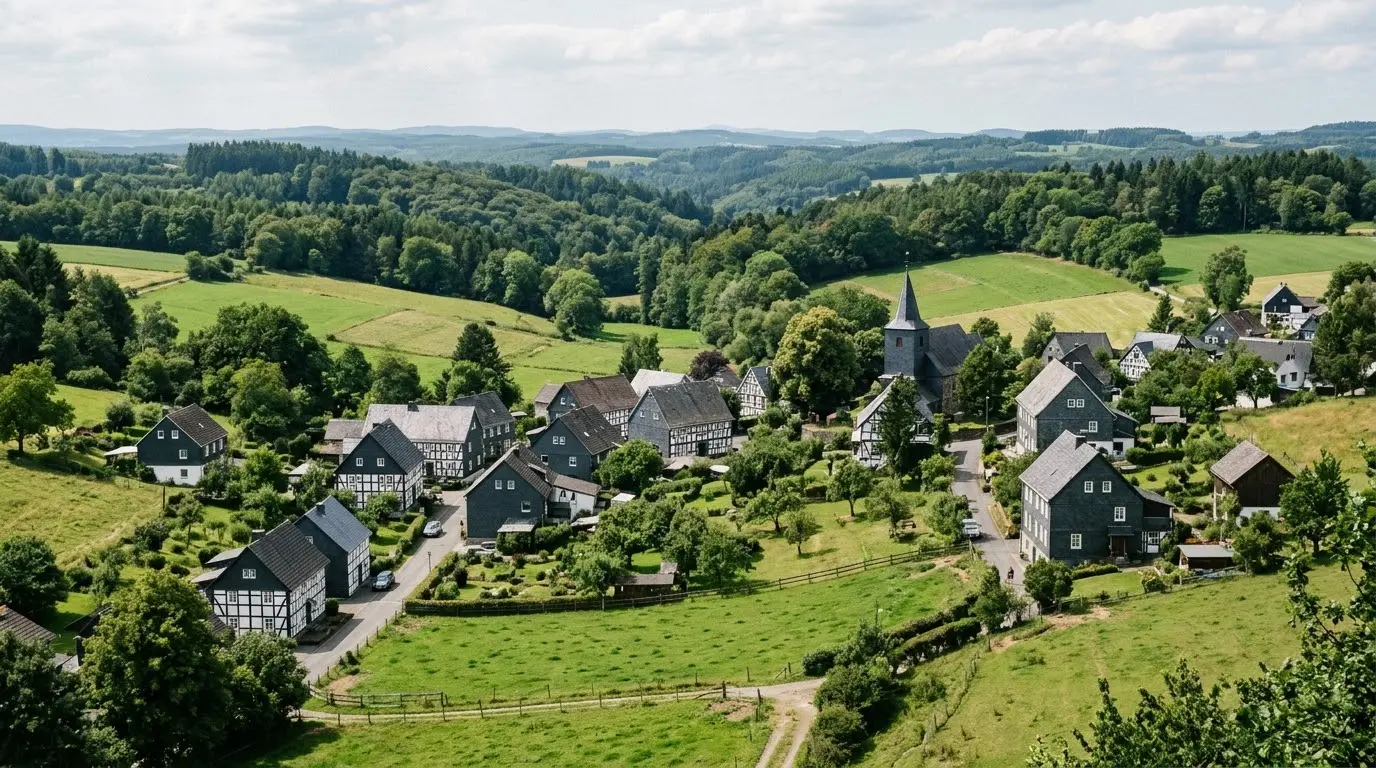
A small place can have an international business connection without becoming a major city. Wehnrath is one example: a locality within Germany’s municipality of Reichshof whose name appears in information about the bicycle tire brand Schwalbe.
Wehnrath belongs to Reichshof in North Rhine-Westphalia, Germany. It is also the location associated with the headquarters of Ralf Bohle GmbH, the company behind Schwalbe. Municipal planning documents explicitly connect the business with the Wehnrath commercial area.
Understanding that relationship helps explain why readers may encounter “Reichshof,” “Wehnrath,” and “Schwalbe” together in an address or company history.
Where Is Wehnrath?
Wehnrath is a locality within Reichshof, a municipality in the Oberbergischer Kreis district of North Rhine-Westphalia.
Reichshof lies in the southeastern part of that district. Its municipal administration is based in Denklingen, while Eckenhagen is another important local center.
The geographical relationships can be summarized as follows:
| Level | Name |
|---|---|
| Country | Germany |
| Federal state | North Rhine-Westphalia |
| District | Oberbergischer Kreis |
| Municipality | Reichshof |
| Locality | Wehnrath |
Wehnrath should therefore not be described as a separate major city.
The municipality’s development material places its commercial area southwest of Eckenhagen. That document also identifies Bohle, operating under the Schwalbe brand, among the businesses associated with the area.
For someone reading a business address, “Reichshof-Wehnrath” combines the municipality with the more specific locality.
What Does Wehnrath’s History Reveal?
Wehnrath’s history extends beyond its modern business connections.
One useful source is the municipal archive finding aid available through Archives in North Rhine-Westphalia. It lists an 1893 cost estimate for building a municipal road from Wehnrath to Sinspert.
The same archive guide includes later files concerning the Sinspert–Wehnrath route and a road between Wehnrath and Volkenrath.
These entries document local infrastructure concerns before the development of the present commercial area.
They do not establish when Wehnrath was founded. An archive entry records a particular matter, such as road construction, rather than the beginning of a settlement.
Becoming Part of Modern Reichshof
The present municipality of Reichshof was formed in 1969, when the previously independent municipalities of Denklingen and Eckenhagen were combined during local government reorganization.
That date belongs to the administrative history of Reichshof. It should not be mistaken for the founding date of every locality within it.
Keeping those timelines separate makes the area’s history clearer: older settlements and infrastructure became part of a reorganized municipality, which later developed new economic priorities.
How Did Wehnrath Become a Business Location?
Wehnrath’s commercial development is an important part of Reichshof’s modern economic history.
The municipality’s retrospective account describes the development of a central commercial area near the A4 motorway as a significant step. It also explains that a later phase was developed jointly with neighboring Bergneustadt.
Commercial areas require more than available land. Access roads, connections to regional transport, and room for businesses to operate influence how they develop.
Reichshof’s economic information presents Wehnrath as a business location within a wider municipality characterized by wooded hills and meadows. Its listed transport connections include the A4 and B256 roads.
The result is a combination of a rural regional setting and organized commercial development.
Wehnrath’s business identity therefore sits alongside its identity as a locality. The two should not be treated as competing descriptions.
What Is Wehnrath’s Connection to Schwalbe?
The connection is direct: municipal documents identify Ralf Bohle GmbH, known through its Schwalbe brand, as an established business in Wehnrath.
Those documents identify the company headquarters at Otto-Hahn-Straße 1. Schwalbe’s current legal notice lists Ralf Bohle GmbH at that street address in 51580 Reichshof, Germany.
The difference is mainly one of address detail: “Reichshof-Wehnrath” identifies the specific locality, while “Reichshof” gives the municipality.
When Did Schwalbe Establish Its Headquarters There?
Schwalbe’s published company material states that its headquarters in Reichshof-Wehnrath was completed in 1995.
That milestone belongs to the company’s history at the site. It does not mean either the business or Wehnrath began in 1995.
Schwalbe’s own facts page gives 1922 as the company’s founding year. Separating these dates avoids confusing the establishment of a business with the completion of a later headquarters.
Are Schwalbe Tires Manufactured in Wehnrath?
A headquarters address does not necessarily identify where products are manufactured.
Schwalbe’s company facts page describes a production partnership with the Korean tire manufacturer Hung-A and identifies production in Indonesia and Vietnam.
Wehnrath’s connection is therefore best explained through the company’s headquarters and business presence, rather than by assuming that all Schwalbe tires are made there.
Is There a Cycling Connection Beyond the Company Address?
Yes. Reichshof’s tourism information describes the Schwalbe Fahrradpark Reichshof, a collection of cycling routes developed with the Bohle company based in Wehnrath.
The official page identifies routes around Denklingen, Wildbergerhütte, and Eckenhagen, alongside the longer Tour de Reichshof. It also provides route information and downloadable tracks.
The word “park” needs context here.
The tourism page describes routes through the municipality’s landscape, rather than presenting the name solely as a fenced attraction at Schwalbe’s headquarters.
This creates a broader local connection between the company and cycling.
The association is not limited to an address on a corporate document; it also appears in the development of recreational routes through Reichshof.
What Should Visitors Know About the Area?
It helps to distinguish three different destinations:
- Wehnrath, the locality.
- The commercial area, where businesses operate.
- Reichshof’s wider recreational landscape, which includes cycling and other visitor activities.
Reichshof’s tourism information emphasizes its hilly terrain. The cycling page provides elevation and surface information and notes that some route sections may be less suitable for narrow-tire road bikes.
Anyone planning a ride should check current route information rather than choosing a route from its name alone.
Similarly, a company headquarters should not automatically be treated as a public attraction or walk-in visitor center. Confirm arrangements directly before planning a business visit.
For leisure information, the Reichshof tourism website is the more relevant starting point. For company inquiries, use Schwalbe’s official contact information.
Conclusion
Wehnrath may be a small locality, but its association with Schwalbe gives it a place in Germany’s cycling industry. Its history, commercial development, and surrounding cycling routes also show that there is more to the area than a company address.
Its history, commercial development, and surrounding cycling routes also show that there is more to the area than a company address.
For anyone researching Schwalbe or exploring Reichshof, understanding local identity provides a useful starting point.
FAQs
Where is Wehnrath in Germany?
Wehnrath is within Reichshof, in the Oberbergischer Kreis district of North Rhine-Westphalia.
Is Wehnrath a separate city?
No. It is a locality within the municipality of Reichshof.
Why is Wehnrath associated with Schwalbe?
Ralf Bohle GmbH, the company behind Schwalbe, has its headquarters in the commercial area.
When was Schwalbe’s headquarters completed in Wehnrath?
Schwalbe’s published material gives 1995 as the completion year.
Are all Schwalbe tires made in Wehnrath?
Schwalbe’s published company information identifies production in Indonesia and Vietnam through its partnership with Hung-A. Wehnrath is associated with the company’s headquarters, not necessarily the manufacturing location.
What is the Schwalbe Fahrradpark Reichshof?
It is a collection of cycling routes through Reichshof, developed in cooperation with the Bohle company.
Was Wehnrath founded in 1969?
The 1969 date refers to the formation of the present municipality of Reichshof. It is not a verified founding date.

If you come across the word Fascisterne in a Danish article, historical document, or political discussion, its meaning is more straightforward than its unfamiliar spelling suggests.
Fascisterne is Danish for “the fascists.” It refers to a particular group of people associated with fascism, the authoritarian political ideology that became prominent in Europe during the twentieth century.
The word is not the name of a separate political movement. It is an ordinary Danish grammatical form with roots in a much larger European history.
Understanding it involves two things: how Danish nouns work and how the term fascist entered European political language.
What Does Fascisterne Mean in English?
The direct English translation of fascisterne is “the fascists.”
According to Den Danske Ordbog, Denmark’s authoritative dictionary of modern Danish, fascist refers to a supporter of fascism. Its listed grammatical endings include -en, -er, and -erne.
The last of these produces fascisterne, the definite plural form.
English usually places “the” before a plural noun to identify a particular group. Danish commonly expresses the same distinction by adding an ending to the noun.
Consider these four forms:
| Danish | English |
|---|---|
| En fascist | A fascist |
| Fascisten | The fascist |
| Fascister | Fascists |
| Fascisterne | The fascists |
These small grammatical differences matter when translating historical accounts.
For instance, fascister might describe fascists generally, while fascisterne can point to a group already identified in the surrounding text.
The word itself does not tell us which country, organization, or historical period is being discussed. Those details come from context.
The Italian Origins Behind the Word
Although Fascisterne is Danish, its political roots lead to Italy.
The Italian word fascio originally referred to a bundle or association. It is connected to the Latin fasces, a bundle of rods, sometimes surrounding an axe, that symbolized official authority in ancient Rome.
The symbol later acquired political significance when Benito Mussolini’s movement adopted Roman imagery as part of its identity.
According to the Online Etymology Dictionary, the English word fascist emerged in the early 1920s from Italian political terminology associated with Mussolini’s movement.
The Italian plural fascisti referred to members or supporters of the movement.
As fascism attracted international attention, related words entered other European languages.
Danish uses the related noun fascist, which follows the language’s own grammatical rules. Its forms include fascisten, fascister, and fascisterne. The word’s history connects it to Italian political terminology, although its Danish grammatical endings are part of the Danish language.
Over time, the related political term became established in Danish, taking grammatical forms that follow the language’s own rules.
How Fascism Became a Political Movement
The meaning of Fascisterne cannot be separated entirely from the history of fascism.
After World War I, Italy faced severe political and economic instability. Social conflict, dissatisfaction with political institutions, and nationalist movements created conditions in which Mussolini gained influence.
He established the Fasci Italiani di Combattimento in 1919, and the movement developed into the National Fascist Party in 1921.
Following the March on Rome in October 1922, Mussolini was appointed prime minister.
His government subsequently dismantled democratic institutions and established a dictatorship.
Fascism rejected liberal democracy and political pluralism. It emphasized aggressive nationalism, authoritarian leadership, the subordination of individual rights, and the use of state power against political opponents.
The United States Holocaust Memorial Museum explains how fascist movements combined extreme nationalism with opposition to democratic government and individual political freedoms.
These historical characteristics explain why the word fascist carries such a serious political meaning.
It originally described supporters of particular political movements rather than simply anyone with strict or unpopular opinions.
How Fascisterne Appeared in Danish History
Fascisterne is not a recently invented expression.
Historical Danish newspapers and publications used the word while reporting on fascist movements during the twentieth century.
The Ordbog over det danske Sprog, a historical dictionary of Danish, records examples from the 1920s and later decades.
One documented example from 1922 concerns fascists taking power in Italy. Other references discuss fascist organizations, demonstrations, and political conflict.
This is useful evidence because it shows that Danish writers were using the term while European fascist movements were developing.
It also helps explain why the word appears in historical archives.
A Danish newspaper discussing Mussolini’s supporters could use fascisterne without referring to a Danish organization.
Similarly, the term might appear in an article about political developments elsewhere in Europe.
Readers should therefore avoid assuming that every historical use refers specifically to fascists within Denmark.
Did Fascism Exist in Denmark?
Yes. Denmark had its own far-right and National Socialist political movements during the interwar period and World War II. One of the best-known examples was the Danish National Socialist Workers’ Party (DNSAP), founded in 1930.
It drew inspiration from German National Socialism and adopted elements of Nazi ideology.
However, Denmark’s political history during this period cannot be reduced to a single organization or movement.
Fascism and Nazism were related but not identical ideologies. Both opposed liberal democracy and promoted authoritarian nationalism, while Nazi ideology placed especially central importance on racial antisemitism and a racial hierarchy.
The existence of Danish Nazi movements provides one possible historical context in which terms such as fascisterne might appear.
Still, the word’s grammatical meaning remains broader than any particular Danish party.
Whether an author is referring to Italian fascists, German Nazis, Danish extremists, or another group must be determined from the passage itself.
Fascisterne, Fascisme, and Fascistisk: Understanding the Difference
Danish uses several related words that may appear together in political writing.
They have different grammatical roles.
| Danish term | English meaning | Usage |
|---|---|---|
| Fascist | Fascist | A person |
| Fascisterne | The fascists | A particular group of people |
| Fascisme | Fascism | The ideology |
| Fascistisk | Fascist | An adjective describing something related to fascism |
| Antifascisme | Antifascism | Opposition to fascism |
For example, fascisme identifies the ideology itself, while fascisterne identifies people.
The distinction is especially important when reading or translating political discussions.
A sentence criticizing fascism is not automatically making an accusation against a specific person.
Likewise, describing someone as a fascist is a more specific claim than discussing authoritarian political ideas in general.
Using these terms accurately helps preserve the meaning of the original text.
Why the Word Still Appears in Modern Discussions
Although Fascisterne has historical roots, the underlying term fascist continues to appear in modern political language.
It may be used in discussions about authoritarianism, nationalist movements, democratic institutions, or historical comparisons.
In some discussions, the word is used to describe movements or political behavior considered similar to historical fascism. Whether that comparison is justified depends on the specific evidence and historical characteristics being discussed.
At other times, it is used more loosely as criticism of someone perceived as intolerant, oppressive, or excessively authoritarian.
Den Danske Ordbog recognizes both the direct political meaning and a broader figurative usage.
That difference creates a challenge for readers.
A political accusation is not necessarily an established historical classification. The presence of the word alone does not prove that a person or organization belongs to a fascist movement.
When encountering fascisterne in contemporary reporting, it helps to examine who is using the term, whom they are describing, and what evidence supports the description.
Why Accurate Translation Matters
Political language can lose important details when translated too casually.
Consider a Danish historical passage mentioning fascisterne.
An English translation should normally use “the fascists.” It should not automatically replace the term with “the Nazis,” “the extremists,” or another expression.
Those alternatives may change the meaning.
Nazism and fascism have overlapping histories and ideological characteristics, but the terms are not interchangeable in every historical situation.
Similarly, translating Fascisterne simply as “authoritarian people” removes the specific political association.
A reliable translation should preserve the wording while allowing historical context to clarify its meaning.
This is particularly valuable for students, researchers, journalists, and anyone reading foreign-language historical records.
Conclusion
Fascisterne is the Danish expression for “the fascists,” formed through the ordinary grammatical structure of the Danish language.
Its roots connect to Italian fascism and, further back, to the ancient Roman symbol known as the fasces.
The word has appeared in Danish political writing for more than a century, reflecting the influence of European history on the language.
For readers encountering Fascisterne today, the most important distinction is between its straightforward translation and the historical or political meaning of the passage in which it appears. Understanding both makes the word easier to interpret accurately.
Frequently Asked Questions
What does Fascisterne mean?
Fascisterne is a Danish word meaning “the fascists.” It is the definite plural form of fascist.
Is Fascisterne a Danish political party?
No. fascisterne is an ordinary Danish noun form, not the official name of a political party. It can refer to different groups depending on the context.
Where does the word Fascisterne come from?
The Danish word is connected to Italian fascista and fascio, ultimately related to the Latin fasces, a Roman symbol of authority.
Is Fascisterne the same as fascism?
No. fascisterne refers to people, while the Danish word fascisme refers to the political ideology.
Is Fascisterne still used today?
Yes. The word remains part of Danish vocabulary and can appear in historical writing, political commentary, and discussions about authoritarian movements.
Does Fascisterne always refer to Italian fascists?
No. Although the term has roots in Italian political history, its Danish meaning can apply to fascists in different countries and periods.
Is Fascisterne the same as Nazis?
Not necessarily. Fascism and Nazism are historically related, but their ideologies and political movements have important differences. The intended meaning depends on the text.
-

 Technology2 weeks ago
Troozer.com: What Is It and Can You Trust It?
-

 News2 weeks ago
Fintechzoom.io Nasdaq: The Future Of Financial Innovations
-

 Technology2 weeks ago
Drovenio Latest Technology News: The Future Of Next-Gen AI Innovations
-

 Home & Living2 weeks ago
Homecz: The Ultimate Guide to Modern Smart Home Living
-

 News1 week ago
Newslikeyou.com: What It Is, What It Covers, and Its Content Services
-

 Technology1 week ago
SoSoActive: What It Is and What You Can Find on the Platform
-
 Finance1 week ago
FintechZoom.com: What It Is, What It Covers, and How It Works
-

 Technology1 day ago
Webinkey.com: What Is It and How Does It Work?