
Lifestyle
Pabington: Why the Word Appears Online


Search for Pabington, and the results can suggest several different subjects: a family name, a website, or an English village. Some pages discuss its supposed history, while others describe it as an emerging internet expression.
The clearest evidence supports a narrower explanation.
Pabington appears in a genealogy database as a surname and has been used as a website name. Its presence online does not establish a single accepted meaning, a confirmed place of origin, or a widespread cultural trend.
Understanding why the word appears in searches means separating these documented uses from the stories attached to them.
What Does Pabington Mean?
Pabington is best approached as a name whose meaning depends on the source.
It does not need a dictionary definition to appear online. Family names, website names, and other proper names can all produce search results without becoming everyday vocabulary.
The reviewed sources point to three distinct situations:
| Context | What the evidence supports |
|---|---|
| Family history | Ancestry maintains a surname page and indexed record summaries for Pabington |
| Website identity | Websites have used Pabington as their publishing name |
| Historical or geographical explanations | A specific origin or recognized settlement was not established through the reviewed evidence |
These uses should not automatically be combined. A website adopting a surname-like name does not prove a connection with the families appearing in historical records.
Pabington as a Family Name
Ancestry’s Pabington page reports one family recorded under that spelling in Kent in the 1891 UK census. It also lists census and birth, marriage, and death record categories associated with the name. These are database summaries; the underlying documents were not examined for this article.
That distinction matters when researching an uncommon surname.
An indexed spelling can reflect the original document, a historical spelling variation, or a transcription error. Examining the record image and comparing names, ages, occupations, and addresses would help establish which explanation applies.
The database entry therefore provides a useful research lead. It does not establish how many people currently bear the surname or prove a complete family history.
Anyone investigating a possible ancestor should follow the record trail rather than relying only on a surname overview.
Websites Also Use the Pabington Name
Another reason the word appears online is straightforward: publishers have used it as a website identity.
At the time of review, Pabington.co.uk displayed articles across subjects including technology, business, travel, fashion, and health. Its homepage presents the term as a general-interest publication. That is an observable use of the name, rather than evidence of a separate linguistic meaning.
The situation was different for Pabington.com. Search results retained descriptions of previously indexed articles, but opening the domain returned a hosting notice stating that the domain had expired. That observation describes the page reached during research; it does not establish its future availability.
The two addresses should also be distinguished. Sharing the word spelling does not, by itself, demonstrate common ownership or an editorial relationship.
Is Pabington a Place or a Misspelling?
Pabington resembles names readers may already recognize. That resemblance can make a place-based explanation sound convincing before any location has been identified.
However, this research did not establish a recognized modern town or village called Pabington. That is a limit of the available evidence, rather than proof that the spelling has never appeared in a historical document.
A geographical claim needs something more concrete: a map, gazetteer entry, local authority record, or identifiable archival reference.
Similarly, Pabington could be a typing error in a particular sentence, but it should not always be corrected automatically.
For example, if someone intended to search for another similarly spelled place, the surrounding details might reveal the mistake. If spelling appears as a family name or website title, changing it could erase the intended reference.
Why Search Results Can Make the Word Seem More Established
A search engine retrieves pages that discuss a term. It does not require that term to have one settled definition.
Google’s explanation of Search describes how automated crawlers discover pages and how information is indexed for retrieval. This helps explain how articles, surname pages, and website names can appear together for the same query.
Several pages repeating an explanation may create an impression of agreement. The important question is whether they point to independent supporting evidence.
Without search-volume or social-platform data, the available results also do not establish that spelling is “viral” or widely used in conversation.
Conclusion
Pabington appears online because the name has several separate uses, including genealogy records and publishing websites.
Its search visibility is easier to explain than its supposed deeper meaning. Start with the specific reference a family record, website address, or sentence and check the evidence attached to it. That approach gives a clearer answer than treating every mention as part of one story.
FAQs
Is Pabington a real surname?
Ancestry lists records indexed under the term. Individual documents should be examined before drawing conclusions about a particular family.
What is the origin of Pabington?
A definitive origin was not established through the reviewed evidence. Its appearance alone cannot confirm an Old English derivation.
Is Pabington a website?
Yes. The name has been used by websites, including a general-interest publication at Pabington.co.uk.
Is Pabington internet slang?
The reviewed evidence does not establish a consistent slang meaning or widespread conversational use.
Is Pabington.com currently available?
During research, it displayed an expired-domain notice. Website availability can change.


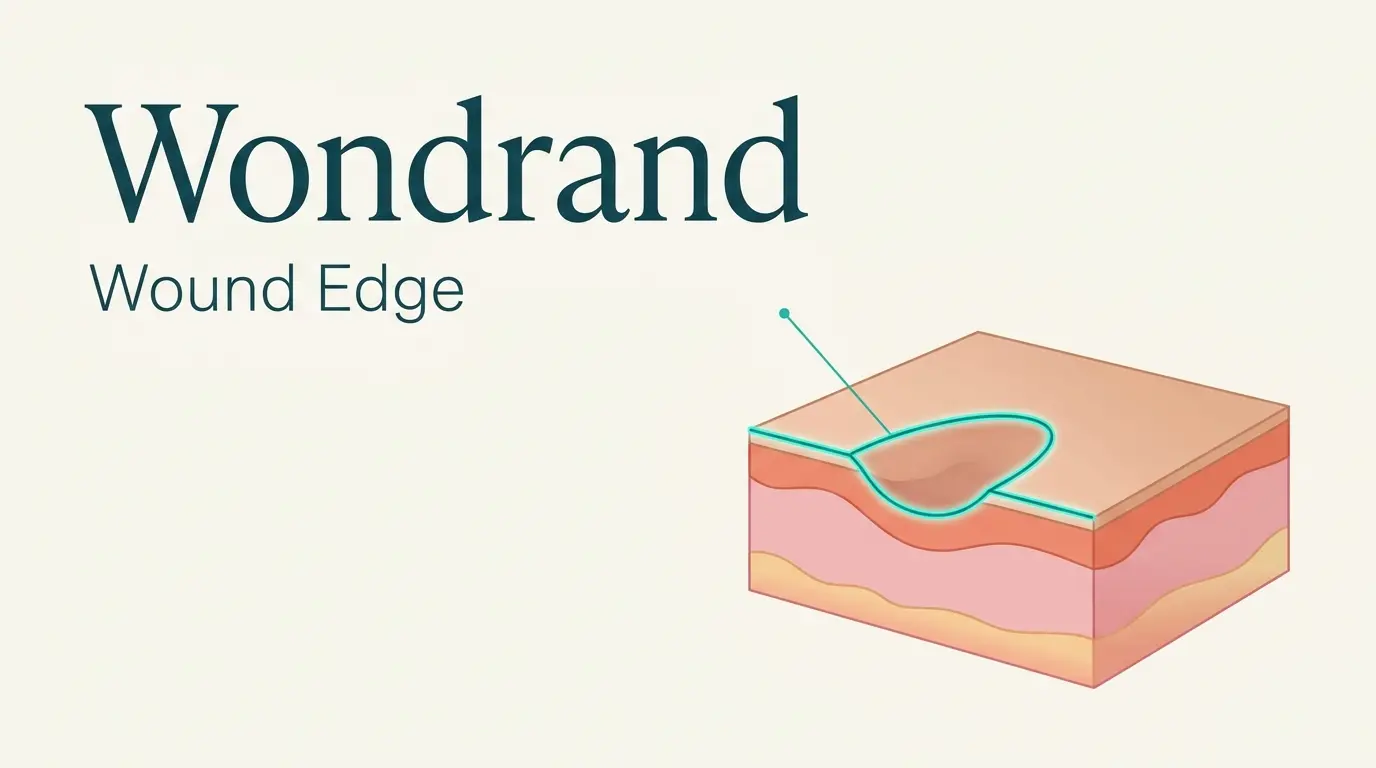
The word wondrand may look unfamiliar in English, but its meaning is straightforward in Dutch: the edge or margin of a wound.
You might encounter it in a nursing textbook, a wound assessment form, or a Dutch medical report. It identifies a particular part of the wound rather than a disease, treatment, or stage of healing.
Dutch clinical documentation uses the term when describing the condition of a wound’s borders. The Dutch healthcare information model for wounds includes a specific field for recording that condition.
Understanding the word therefore involves both a simple translation and some context about how healthcare professionals use it.
What Does Wondrand Mean?
Wondrand means “wound edge” or “wound margin.”
It refers to the border where the wound meets the adjacent skin. In a small cut, it refers to the margins along the injury. In a larger open wound, it describes the border between the wound and the surrounding skin.
The term names a location. It does not, by itself, say whether that location is healthy, irritated, infected, or healing.
That information comes from the surrounding description.
A medical note may discuss the wound edge separately from the wound’s depth, fluid, or tissue appearance. Dutch wound-classification documentation includes distinct fields for these observations.
For someone translating a report, this distinction matters: wondrand is not another word for the whole wound.
The Dutch Origin of Wondrand
Wondrand combines two Dutch nouns:
| Dutch word | English meaning |
|---|---|
| Wond | Wound |
| Rand | Edge, border, or rim |
| Wondrand | Wound edge or wound margin |
The Algemeen Nederlands Woordenboek, published by the Dutch Language Institute, describes wond as an injury involving separation or damage to skin or underlying tissue. Its entry for rand includes the sense of a boundary or border.
The compound’s construction makes its medical meaning understandable: it names the edge of the wound.
The plural is wondranden, meaning “wound edges.” This plural form appears in Dutch clinical classification materials.
The sources reviewed establish its language and clinical use, but they do not establish a first recorded use or a person who coined it.
How Is Wondrand Used in Medical Documentation?
Healthcare professionals describe different wound features so they can record findings and compare changes over time.
The wound edge is one of those features.
Dutch clinical materials include descriptions such as intact edges, maceration, eczema-like changes, and undermining. These are observations about tissue condition rather than interchangeable names for the same problem.
For example, a note containing wondrand might describe whether the border remains intact or whether moisture has affected the skin.
The wording needs to be interpreted alongside the rest of the assessment. A single adjective cannot explain the wound’s cause or determine the appropriate treatment.
This is similar to other medical terminology: identifying the body area being described is only the first step toward understanding the full note.
Examples of the Word in Context
The following are illustrative translations, not quotations from patient records:
| Dutch phrase | English translation |
|---|---|
| Beoordeling van de wondrand | Assessment of the wound edge |
| De wondranden zijn intact | The wound edges are intact |
| Maceratie van de wondrand | Maceration of the wound edge |
| Ondermijning van de wondrand | Undermining of the wound edge |
These examples show why translating the complete phrase is more useful than translating the noun alone.
Why Does the Wound Edge Matter?
The border of a wound is relevant to how new skin covers the injured area.
WCS, the Dutch wound-care knowledge organization, describes epithelialization from wound edges as part of healing. Epithelialization is the formation of a new surface layer of skin cells over the wound.
The condition of the edge can therefore help clinicians assess whether healing is progressing or encountering difficulties.
However, the edge is only one part of the picture.
WCS materials also discuss tissue condition, infection, moisture, and underlying patient factors. Problems such as inadequate oxygen supply, infection, drying, and repeated dressing trauma can interfere with epithelial advancement.
A wound should not be judged from its border alone. Its appearance needs to be considered with the history, symptoms, and broader clinical assessment.
Wondrand in the TIME Assessment Framework
Wondrand appears in Dutch explanations of the TIME framework, which organizes several aspects of wound assessment.
A nursing course from Karel de Grote University of Applied Sciences and Arts presents the framework as follows:
| Letter | Assessment area | General focus |
|---|---|---|
| T | Tissue | The tissue present in the wound |
| I | Infection or inflammation | Signs relevant to infection and inflammatory processes |
| M | Moisture | The wound’s moisture and fluid balance |
| E | Edge | The condition of the wound edges and surrounding area |
The I component is described as “Infection” in some sources and “Inflammation/Infection” in others.
Its explanation of E includes intactness, maceration, eczema-like changes, and undermining.
The framework helps organize observations. It is not a diagnosis, and its categories do not automatically prescribe a particular dressing or procedure.
For an English-speaking reader, the main connection is simple: wondrand corresponds to the “edge” component.
Wondrand, Wound Bed, and Surrounding Skin
Several nearby terms can become confusing when translated without context.
The wound edge, wound bed, and surrounding skin describe different areas.
| Area | What it describes |
|---|---|
| Wound bed | The exposed tissue within an open wound |
| Wound edge | The border between the wound and adjacent skin |
| Surrounding or periwound skin | The skin around the wound |
Clinical assessment guidance distinguishes these areas because each can show different findings. Mölnlycke’s Dutch-language assessment material, for example, separates wound-bed tissue, edge changes, and the condition of surrounding skin.
A report describing irritation around a wound is therefore not necessarily describing the tissue inside it.
Keeping those locations separate makes a translation more precise and helps avoid turning one observation into a claim about the entire injury.
What Do Maceration and Undermining Mean?
These terms may appear alongside wondrand in wound-care materials.
Maceration
Maceration means softening or breakdown of tissue associated with excessive moisture.
WCS guidance identifies excess fluid as a cause of maceration at the wound margin and distinguishes it from the controlled moisture conditions used to support healing.
The important distinction is balance. A wound-care plan may aim to maintain an appropriate moist environment while protecting tissue from excess fluid.
The word maceratie in a Dutch note describes an observation. It does not tell a reader which product to apply.
Undermining
Undermining describes tissue loss extending beneath an overlying wound edge. The wound may therefore extend farther under the skin than its visible opening suggests.
Clinical assessment materials specifically include checking wound edges for undermining.
This requires professional assessment. A patient should not try to explore beneath a wound edge to interpret the term.
How to Understand Wondrand in Your Medical Report
Start with the complete sentence and the heading under which it appears.
Is the report recording the wound’s appearance? Describing a change since the previous visit? Explaining a care plan?
Keep three questions separate:
- Location: Which part of the wound is being discussed?
- Observation: What did the clinician find?
- Plan: What action, if any, was recommended?
For example, translating “maceration of the wound edge” identifies a tissue finding. It does not establish the cause of the wound or whether infection is present.
If the wording affects your care, ask the treating professional to explain the finding and its significance. Treatment should follow the assessment rather than a translation of one term.
Seek prompt medical advice if a wound becomes increasingly painful, swollen, or red, produces pus, or is accompanied by fever or feeling unwell. Heavy or uncontrolled bleeding, or a very deep wound, requires urgent medical assessment.
These warning signs are consistent with NHS guidance on cuts and grazes.
Conclusion
Wondrand is a Dutch medical term meaning wound edge. It identifies the border of an injury and appears in assessments describing tissue condition and healing.
Its translation is simple, but its clinical significance depends on the accompanying description. Understanding the whole note—and distinguishing the wound edge from the wound bed and surrounding skin—provides a much clearer picture than interpreting the word in isolation.
FAQs
What does wondrand mean in English?
It means “wound edge” or “wound margin.”
Is wondrand a Dutch word?
Yes. It combines the Dutch words wond, meaning wound, and rand, meaning edge or border.
What is the plural of wondrand?
The plural is wondranden, meaning wound edges.
Does wondrand mean an infected wound?
No. It names a part of the wound. Infection is a separate clinical finding.
Is wondrand the same as a scar?
No. Wondrand refers to a wound’s edge, rather than the scar that may remain after healing.
What does wondrand mean in the TIME framework?
It corresponds to E: Edge, the assessment of wound-edge condition.
Does the word tell me how to treat a wound?
No. Treatment depends on the wound’s cause, condition, symptoms, and professional assessment.
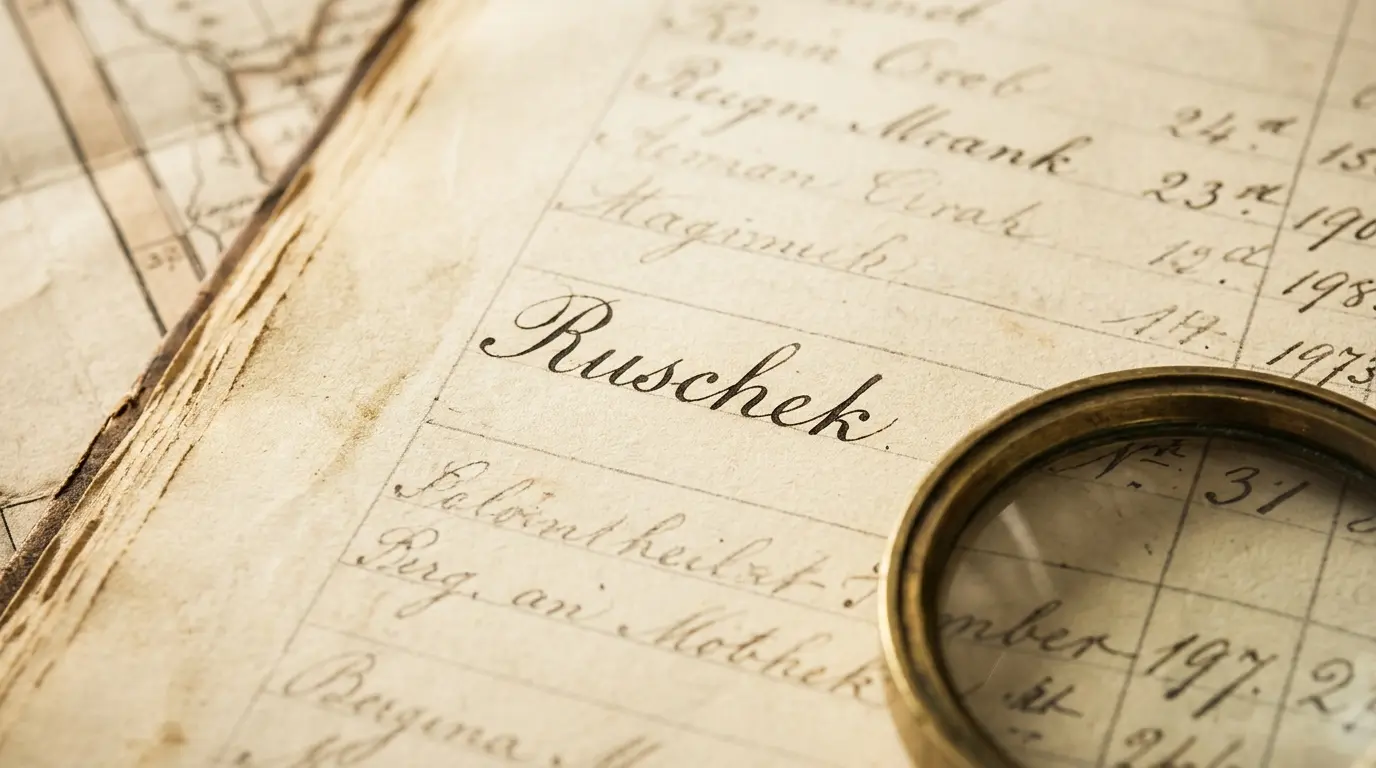
A surname can preserve a connection to an old place, a local landscape, or an earlier way of identifying a family. But understanding its meaning is different from tracing the people who carried it.
Ruschek appears in surname references and historical record indexes, which offer a more reliable starting point than interpreting the spelling alone.
FamilySearch’s indexed surname reference classifies Ruschek as German and associates it with residence near a reed bed. Historical record summaries also document people bearing the name in eighteenth- and nineteenth-century Europe.
These findings provide a starting point, but they do not establish a single birthplace, migration story, or common ancestor for every Ruschek family.
What Does Ruschek Mean?
The FamilySearch surname reference presents a topographic explanation for Ruschek, attributing its information to the Dictionary of American Family Names.
The entry connects the name with someone living near a reed bed and cross-references Rusch. It also mentions the spelling Rüscher.
A topographic surname describes an association with a landscape feature. In this interpretation, the identifying feature would have been an area where reeds grew.
That is more specific than saying the name simply means “nature” or “water.” It describes a possible relationship between a person’s residence and the surrounding land.
However, the wording should remain attributed to the reference. A surname explanation is a linguistic guide, not a record showing how a particular ancestor acquired the name.
Where Does the Ruschek Surname Come From?
The available surname reference points toward a German linguistic association. Historical records provide additional geographical context, but they answer a different question: where particular people were recorded.
For example, FamilySearch’s indexed results include Ruschek entries associated with Brandenburg, historical East Prussia, and Pomerania.
These locations help identify places where research could continue. They do not establish that the surname originated in any one of them.
A baptismal entry records an event in a particular community. The family may have lived there for generations, or the parents may have arrived from elsewhere.
Identifying an earlier home requires additional evidence, such as a marriage record naming a birthplace or a register documenting a move.
Taken together, these records support documented German and Central European connections, but they do not identify a single founding village or family.
What Historical Records Mention Ruschek?
Several indexed entries show the surname in identifiable historical settings.
The following examples come from FamilySearch’s discovery results:
Carl Friedrich Ruschek
-
Born: January 10, 1792
-
Baptized: January 16, 1792
-
Location: Brandenburg an der Havel
George Friedrich Wilhelm Ruschek
-
Born: March 11, 1793
-
Baptized: April 14, 1793
-
Location: Königsberg, historical East Prussia
Auguste Louise Wilhelmine Ruschek
-
Born: July 9, 1840
-
Christened: August 30, 1840
-
Location: Stettin, historical Pomerania
Anton Ruschek
-
Census: 1901 England and Wales
-
Birthplace recorded: Austria
-
Location: Shoreditch, London
These are database summaries rather than original documents independently examined for this article.
For someone researching a family connection, the next step would be to inspect the underlying record and its collection details.
An index is useful for locating evidence. It may omit information that appears in the original register, and transcription errors are possible.
These examples demonstrate historical use of the name. They should not be presented as the first people ever to bear it.
Are There Different Spellings of Ruschek?
Spelling deserves particular attention in family-history research.
The U.S. National Archives advises researchers to search surname variants and alternative forms of given names. It also warns that people with similar names should not automatically be treated as the same individual.
One useful research lead for Ruschek appears in a genealogical name index published by Degener.
The index lists both “Ruschek” and “Ruzek/Ruschek,” with references to pages in the associated volume.
That pairing is worth investigating. However, the index alone does not explain the relationship between the spellings.
The referenced text would need to be consulted before concluding whether it describes a name change, alternative spelling, or another connection.
The same principle applies to names such as Rusch and Rüscher. A surname reference may connect them linguistically, but a relationship between individual families requires records.
Does Everyone Named Ruschek Belong to the Same Family?
A shared surname is a clue, not a completed family tree.
To establish a relationship, researchers need evidence connecting people across generations. Matching names alone can produce mistakes, particularly when relatives reuse the same given names.
Dates, residences, occupations, spouses, and parents all help distinguish individuals.
For example, two records mentioning a person named Johann Ruschek may concern the same man. But if their ages, spouses, or places of residence conflict, the connection needs further investigation.
The U.S. National Archives recommends comparing details such as age, birthplace, and family composition when distinguishing people with similar names.
A reliable family history develops from a chain of supported relationships rather than a collection of matching search results.
How Can You Research Your Ruschek Family History?
Begin with a known person rather than an assumed surname origin.
A grandparent’s birthplace or a marriage certificate can give the research a clearer direction than a broad search for everyone named Ruschek.
Gather Existing Family Information
Start with documents already available within the family.
Useful material may include certificates, letters, photographs with captions, address books, and older family notes.
Record where each detail came from. A date written on a certificate and a date recalled in conversation are both useful, but they carry different kinds of evidence.
Work Backward Through Records
Identify the person’s parents, then look for records that confirm the relationship.
The aim is to establish each generation before moving to an earlier one.
A practical research table can keep the process organized:
-
Name: Exact spelling used in the document.
-
Event: Birth, baptism, marriage, census, or death.
-
Date and place: Details as recorded, including historical place names.
-
Relationships: Parents, spouse, children, or other named relatives.
-
Source: Archive, collection, record reference, and image number.
-
Uncertainty: Missing details, conflicting dates, or unclear handwriting.
This makes it easier to return to a source and explain why a connection was accepted.
Search Alternative Spellings Carefully
Try variations when an exact search fails, particularly where records suggest a spelling difference.
The National Archives’ genealogy catalog guide recommends searching full names, surnames alone, and alternative spellings.
Keep the spelling from each original document in your notes. Standardizing every occurrence too early can hide evidence about how a name was recorded.
Separate Family Trees From Historical Records
FamilySearch distinguishes historical records from community family-tree profiles in its search results.
A contributed tree may suggest a useful connection. Before adopting it, examine the records supporting that relationship.
An attractive family narrative should remain a research lead until the evidence supports it.
Why Can Online Accounts of Ruschek Differ?
Different sources may discuss different things under the same surname.
A linguistic reference attempts to explain a name’s derivation. A historical index identifies recorded individuals. A family tree proposes relationships. A modern directory may simply list someone currently using the name.
Those sources should not be combined as though they all establish the same claim.
Database totals also need care. A search-result count is not a count of living surname bearers: one individual may appear in multiple records, and a search may include broader matches.
For that reason, this article does not assign Ruschek an exact worldwide population or a definitive rarity ranking.
More useful clues come from identifiable records, documented locations, and family relationships that can be verified.
Conclusion
Ruschek is a documented surname with German and Central European connections. FamilySearch presents a landscape-based interpretation, while historical indexes provide specific people and places for further investigation.
The name’s general meaning and an individual family’s ancestry remain separate questions. For anyone tracing Ruschek relatives, the strongest starting point is a known ancestor and a sequence of records linking that person to earlier generations.
FAQs
What does Ruschek mean?
FamilySearch’s surname reference associates it with someone living near a reed bed. This is an attributed linguistic explanation rather than proof of every family’s origin.
Is Ruschek a German surname?
The cited reference classifies it as German. That classification does not determine the nationality or ancestry of every person carrying the name.
How old is the Ruschek surname?
The reviewed indexed records include eighteenth-century examples. They do not establish when the surname first developed.
Are Ruschek and Ruzek the same surname?
A genealogical index pairs the spellings, providing a research lead. Their relationship in a particular family needs supporting records.
Does the surname prove that two people are related?
No. Establishing kinship requires evidence connecting the individuals through family relationships.
What is the best way to research Ruschek ancestry?
Begin with a known relative, collect supporting documents, and work backward one generation at a time. Check original records wherever available.

That is the kind of situation where incredorable makes sense.
Incredorable is an informal blend of “incredible” and “adorable,” used to describe something exceptionally cute or endearing. It adds a touch of exaggeration to an affectionate reaction.
The spelling may look unfamiliar, but the idea is easy to recognize. The more interesting questions are whether it counts as a real word, where it came from, and when it works better than simply saying “adorable.”
What Does Incredorable Mean?
Incredorable expresses a strong reaction to something cute, lovable, or charming.
Think of it as a playful way to say that ordinary praise does not feel quite enthusiastic enough.
For example:
“The puppy tried to carry a slipper bigger than its head. It was incredorable.”
Here, the word communicates affection and amusement. The puppy’s behavior is endearing, and the invented-sounding adjective makes the description more expressive.
It works differently from a neutral observation. Calling something small describes its size. Calling it incredorable tells the reader how the speaker feels about it.
The context usually supplies the meaning. A photograph, a short story, or a description of a sweet gesture can make the word understandable even to someone encountering it for the first time.
Is Incredorable a Real Word?
Incredorable has documented published use, so it is more than a hypothetical combination of letters. However, it is best treated as an informal coined expression rather than assumed to be standard vocabulary.
A dedicated entry did not surface in the Cambridge and Merriam-Webster searches conducted for this article. That finding does not establish that the expression is absent from every dictionary.
There are two separate questions here.
The first is whether a word communicates a recognizable meaning. Incredorable can do that when the context is playful and affectionate.
The second is whether readers can be expected to recognize it without explanation. That is less certain.
Compare these sentences:
“The children made an adorable paper village.”
“The children made an incredorable paper village.”
Both communicate a positive reaction, but the second draws attention to the writer’s word choice. It sounds more personal, exaggerated, and deliberately playful.
That can be an advantage in a caption. In a formal description, the familiar word may be clearer.
How Is the Word Formed?
Incredorable can be understood as a word blend, also called a portmanteau.
A portmanteau combines elements of existing words to create a new expression. Collins Dictionary gives “smog,” formed from “smoke” and “fog,” as an example.
Incredorable follows a similar construction:
Incredible + adorable → incredorable
The spelling and meaning suggest a blend of “incredible” and “adorable,” combining a sense of emphasis with the idea of affection or cuteness.
That recognizable structure helps explain why the expression can make sense without a lengthy definition.
However, a transparent construction does not guarantee that everyone will understand it immediately. Readers may initially interpret an unfamiliar blend as a spelling mistake.
A little context usually resolves that problem.
Where Does Incredorable Come From?
A Star Tribune column by James Lileks documented the expression on May 16, 2017.
This is evidence of an earlier published appearance, rather than proof of its first use.
The original creator was not established in this research. It would therefore be inaccurate to say that Lileks invented the word or that it originated on that publication date.
Word histories can be difficult to trace, particularly when an expression is easy for different people to invent independently.
Two speakers could combine the same familiar words without knowing that someone else had already done so. A dated reference helps establish a timeline, but it does not necessarily identify a single point of origin.
How Do You Use Incredorable in a Sentence?
Incredorable works as an adjective. You can place it before a noun or after a linking verb such as “is,” “looks,” or “seems.”
The following examples are original illustrations of possible usage.
Describing Animals
Animals provide an easy context because the intended affectionate meaning is clear.
“An incredorable little rabbit appeared from behind the flowerpot.”
“Your dog looks incredorable in that oversized raincoat.”
The word adds enthusiasm without requiring a detailed explanation.
It is especially suited to a lighthearted description of an animal’s expression, movement, or behavior.
Describing Objects and Handmade Gifts
The expression can also describe something designed to look charming.
“She made an incredorable clay house with a tiny yellow door.”
“These miniature knitted vegetables are incredorable.”
In these examples, the speaker is responding to the object’s appearance and character. The word would be less informative in a technical product description, where materials, dimensions, and function matter more.
Describing a Gesture or Moment
Something does not have to be physically cute to invite an affectionate response.
“He saved a seat for his teddy bear. The whole scene was incredorable.”
“Her handmade invitation was incredorable, with its tiny illustrations and playful details.”
Here, the expression responds to the feeling created by the moment.
Use judgment when describing people, though. A playful compliment that feels warm between friends could sound overly familiar or patronizing in a professional setting.
Incredorable vs. Incredible vs. Adorable
These words share parts of their spelling, but they are not interchangeable.
Cambridge Dictionary defines “incredible” in terms that include being difficult to believe. Its entry for “adorable” describes someone or something that inspires liking or affection.
The distinction becomes clearer through examples:
| Word | Main idea | Original example |
|---|---|---|
| Incredible | Disbelief or strong admiration | “It seemed incredible that nobody had noticed the missing roof.” |
| Adorable | Cuteness or affection | “The puppy has an adorable sleepy expression.” |
| Incredorable | Playful emphasis on cuteness | “That sleepy puppy tucked inside a blanket is incredorable.” |
An engineering achievement might be incredible without being adorable.
A small toy might be adorable without being surprising.
Incredorable is most useful when the writer wants an affectionate description with extra personality.
When Should You Avoid Using It?
The main consideration is whether the word serves the reader.
For a friendly message, a playful caption, or an informal story, unusual wording can be part of the appeal. For a business report or academic paper, it may distract from the point.
Consider the difference:
“The display includes handmade figures.”
“The display includes small handmade animal figures.”
The first communicates enthusiasm. The second explains what visitors will see.
Neither sentence is automatically better. They perform different jobs.
If you need clarity, choose a familiar alternative such as:
- Adorable
- Endearing
- Charming
- Delightful
- Exceptionally cute
“Incredibly adorable” is also available when you want emphasis without using a blended word.
Conclusion
Incredorable is a playful expression for something that inspires an especially affectionate reaction. Its recognizable word parts make it useful for lighthearted descriptions, personal messages, and imaginative captions.
Its informal character is part of its effect. Use it when personality helps the sentence, and choose a familiar alternative when precision matters more.
FAQs
What does incredorable mean in simple English?
It means exceptionally cute or endearing, with a playful sense of extra enthusiasm.
Is incredorable a spelling mistake?
It can be intentional wordplay. If the surrounding sentence concerns something cute or affectionate, that interpretation is more likely than an accidental misspelling.
Is incredorable in the dictionary?
A dedicated entry was not confirmed in the Cambridge and Merriam-Webster searches conducted for this article. It should be treated as an informal expression rather than assumed to be standard dictionary vocabulary.
Who invented incredorable?
Its original creator was not established. A published appearance does not, by itself, identify the person who first formed the word.
Can incredorable describe a person?
It can function as a playful compliment, but the relationship and context matter. Avoid it where an overly familiar description could feel uncomfortable or patronizing.
Can I use incredorable in formal writing?
A familiar alternative is usually clearer. Reserve it for writing where a deliberately playful voice is appropriate.
-

 Technology2 weeks ago
Troozer.com: What Is It and Can You Trust It?
-

 Technology6 days ago
Webinkey.com: What Is It and How Does It Work?
-
 Technology1 week ago
Blargz com: What Is It and How Does It Work?
-
 Technology2 weeks ago
SoSoActive: What It Is and What You Can Find on the Platform
-

 News3 weeks ago
Fintechzoom.io Nasdaq: The Future Of Financial Innovations
-

 Technology3 weeks ago
Drovenio Latest Technology News: The Future Of Next-Gen AI Innovations
-

 News2 weeks ago
Newslikeyou.com: What It Is, What It Covers, and Its Content Services
-

 Home & Living3 weeks ago
Homecz: The Ultimate Guide to Modern Smart Home Living