
Lifestyle
Ruschek Surname: Meaning, Origin, and Family History

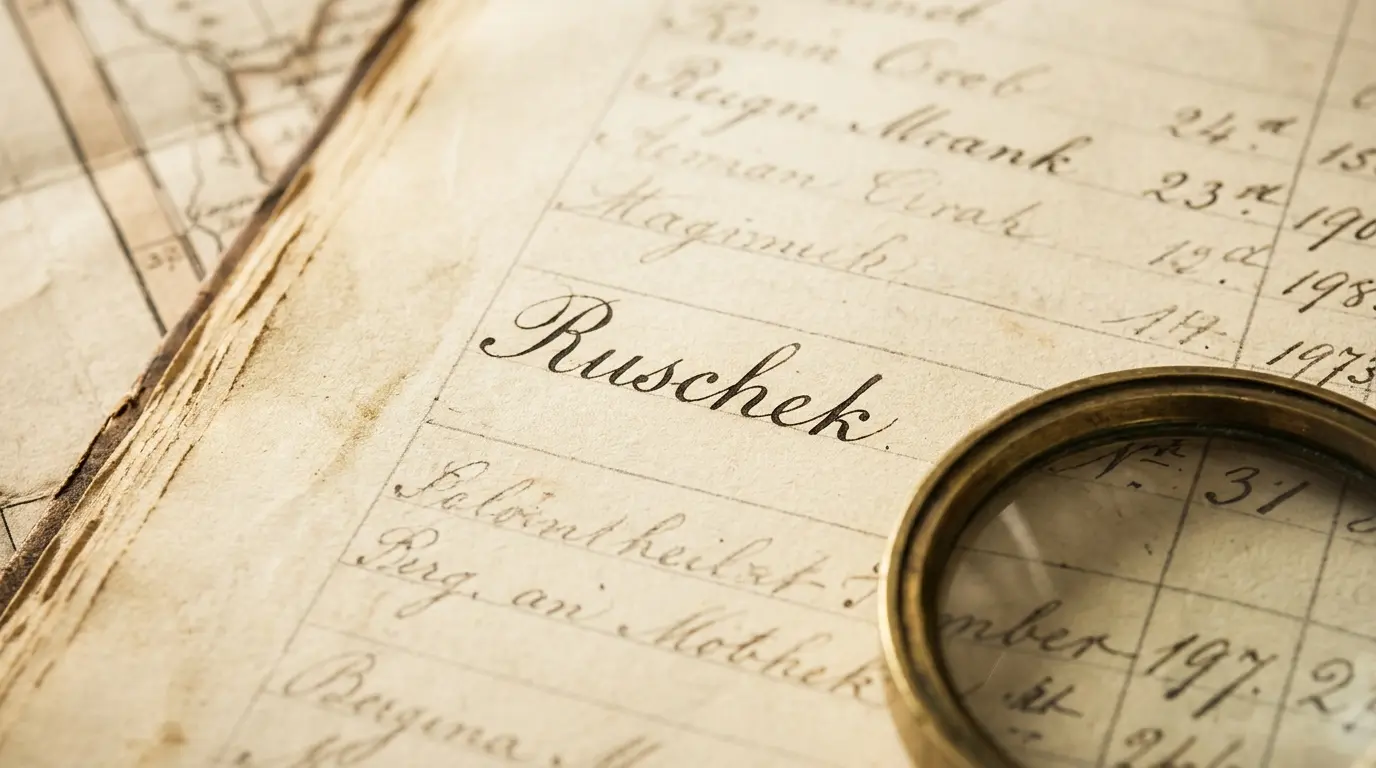
A surname can preserve a connection to an old place, a local landscape, or an earlier way of identifying a family. But understanding its meaning is different from tracing the people who carried it.
Ruschek appears in surname references and historical record indexes, which offer a more reliable starting point than interpreting the spelling alone.
FamilySearch’s indexed surname reference classifies Ruschek as German and associates it with residence near a reed bed. Historical record summaries also document people bearing the name in eighteenth- and nineteenth-century Europe.
These findings provide a starting point, but they do not establish a single birthplace, migration story, or common ancestor for every Ruschek family.
What Does Ruschek Mean?
The FamilySearch surname reference presents a topographic explanation for Ruschek, attributing its information to the Dictionary of American Family Names.
The entry connects the name with someone living near a reed bed and cross-references Rusch. It also mentions the spelling Rüscher.
A topographic surname describes an association with a landscape feature. In this interpretation, the identifying feature would have been an area where reeds grew.
That is more specific than saying the name simply means “nature” or “water.” It describes a possible relationship between a person’s residence and the surrounding land.
However, the wording should remain attributed to the reference. A surname explanation is a linguistic guide, not a record showing how a particular ancestor acquired the name.
Where Does the Ruschek Surname Come From?
The available surname reference points toward a German linguistic association. Historical records provide additional geographical context, but they answer a different question: where particular people were recorded.
For example, FamilySearch’s indexed results include Ruschek entries associated with Brandenburg, historical East Prussia, and Pomerania.
These locations help identify places where research could continue. They do not establish that the surname originated in any one of them.
A baptismal entry records an event in a particular community. The family may have lived there for generations, or the parents may have arrived from elsewhere.
Identifying an earlier home requires additional evidence, such as a marriage record naming a birthplace or a register documenting a move.
Taken together, these records support documented German and Central European connections, but they do not identify a single founding village or family.
What Historical Records Mention Ruschek?
Several indexed entries show the surname in identifiable historical settings.
The following examples come from FamilySearch’s discovery results:
Carl Friedrich Ruschek
-
Born: January 10, 1792
-
Baptized: January 16, 1792
-
Location: Brandenburg an der Havel
George Friedrich Wilhelm Ruschek
-
Born: March 11, 1793
-
Baptized: April 14, 1793
-
Location: Königsberg, historical East Prussia
Auguste Louise Wilhelmine Ruschek
-
Born: July 9, 1840
-
Christened: August 30, 1840
-
Location: Stettin, historical Pomerania
Anton Ruschek
-
Census: 1901 England and Wales
-
Birthplace recorded: Austria
-
Location: Shoreditch, London
These are database summaries rather than original documents independently examined for this article.
For someone researching a family connection, the next step would be to inspect the underlying record and its collection details.
An index is useful for locating evidence. It may omit information that appears in the original register, and transcription errors are possible.
These examples demonstrate historical use of the name. They should not be presented as the first people ever to bear it.
Are There Different Spellings of Ruschek?
Spelling deserves particular attention in family-history research.
The U.S. National Archives advises researchers to search surname variants and alternative forms of given names. It also warns that people with similar names should not automatically be treated as the same individual.
One useful research lead for Ruschek appears in a genealogical name index published by Degener.
The index lists both “Ruschek” and “Ruzek/Ruschek,” with references to pages in the associated volume.
That pairing is worth investigating. However, the index alone does not explain the relationship between the spellings.
The referenced text would need to be consulted before concluding whether it describes a name change, alternative spelling, or another connection.
The same principle applies to names such as Rusch and Rüscher. A surname reference may connect them linguistically, but a relationship between individual families requires records.
Does Everyone Named Ruschek Belong to the Same Family?
A shared surname is a clue, not a completed family tree.
To establish a relationship, researchers need evidence connecting people across generations. Matching names alone can produce mistakes, particularly when relatives reuse the same given names.
Dates, residences, occupations, spouses, and parents all help distinguish individuals.
For example, two records mentioning a person named Johann Ruschek may concern the same man. But if their ages, spouses, or places of residence conflict, the connection needs further investigation.
The U.S. National Archives recommends comparing details such as age, birthplace, and family composition when distinguishing people with similar names.
A reliable family history develops from a chain of supported relationships rather than a collection of matching search results.
How Can You Research Your Ruschek Family History?
Begin with a known person rather than an assumed surname origin.
A grandparent’s birthplace or a marriage certificate can give the research a clearer direction than a broad search for everyone named Ruschek.
Gather Existing Family Information
Start with documents already available within the family.
Useful material may include certificates, letters, photographs with captions, address books, and older family notes.
Record where each detail came from. A date written on a certificate and a date recalled in conversation are both useful, but they carry different kinds of evidence.
Work Backward Through Records
Identify the person’s parents, then look for records that confirm the relationship.
The aim is to establish each generation before moving to an earlier one.
A practical research table can keep the process organized:
-
Name: Exact spelling used in the document.
-
Event: Birth, baptism, marriage, census, or death.
-
Date and place: Details as recorded, including historical place names.
-
Relationships: Parents, spouse, children, or other named relatives.
-
Source: Archive, collection, record reference, and image number.
-
Uncertainty: Missing details, conflicting dates, or unclear handwriting.
This makes it easier to return to a source and explain why a connection was accepted.
Search Alternative Spellings Carefully
Try variations when an exact search fails, particularly where records suggest a spelling difference.
The National Archives’ genealogy catalog guide recommends searching full names, surnames alone, and alternative spellings.
Keep the spelling from each original document in your notes. Standardizing every occurrence too early can hide evidence about how a name was recorded.
Separate Family Trees From Historical Records
FamilySearch distinguishes historical records from community family-tree profiles in its search results.
A contributed tree may suggest a useful connection. Before adopting it, examine the records supporting that relationship.
An attractive family narrative should remain a research lead until the evidence supports it.
Why Can Online Accounts of Ruschek Differ?
Different sources may discuss different things under the same surname.
A linguistic reference attempts to explain a name’s derivation. A historical index identifies recorded individuals. A family tree proposes relationships. A modern directory may simply list someone currently using the name.
Those sources should not be combined as though they all establish the same claim.
Database totals also need care. A search-result count is not a count of living surname bearers: one individual may appear in multiple records, and a search may include broader matches.
For that reason, this article does not assign Ruschek an exact worldwide population or a definitive rarity ranking.
More useful clues come from identifiable records, documented locations, and family relationships that can be verified.
Conclusion
Ruschek is a documented surname with German and Central European connections. FamilySearch presents a landscape-based interpretation, while historical indexes provide specific people and places for further investigation.
The name’s general meaning and an individual family’s ancestry remain separate questions. For anyone tracing Ruschek relatives, the strongest starting point is a known ancestor and a sequence of records linking that person to earlier generations.
FAQs
What does Ruschek mean?
FamilySearch’s surname reference associates it with someone living near a reed bed. This is an attributed linguistic explanation rather than proof of every family’s origin.
Is Ruschek a German surname?
The cited reference classifies it as German. That classification does not determine the nationality or ancestry of every person carrying the name.
How old is the Ruschek surname?
The reviewed indexed records include eighteenth-century examples. They do not establish when the surname first developed.
Are Ruschek and Ruzek the same surname?
A genealogical index pairs the spellings, providing a research lead. Their relationship in a particular family needs supporting records.
Does the surname prove that two people are related?
No. Establishing kinship requires evidence connecting the individuals through family relationships.
What is the best way to research Ruschek ancestry?
Begin with a known relative, collect supporting documents, and work backward one generation at a time. Check original records wherever available.

A repeating number, an unusual dream, or an unexpected encounter with an animal can send someone searching for a symbolic explanation. SpiritualHubz.com publishes articles aimed at that curiosity, exploring possible spiritual meanings behind everyday experiences.
However, the website offers a broader mix of content than its name alone suggests.
SpiritualHubz.com is an article-based website with a stated focus on spiritual meanings, dream interpretation, tattoo symbolism, and personal growth. Its recent publishing also extends into technology, business, shopping, and other general-interest subjects.
The addition of “USA” creates another question. Although the site’s title and legal pages contain American references, those details do not independently establish a separate U.S. edition or a verified American operating company.
A useful assessment therefore starts with what readers can actually find on the website.
What Is SpiritualHubz.com USA?
SpiritualHubz.com presents itself as a place to explore spirituality, reflection, and personal development.
Its About page identifies spiritual meanings, dreams, tattoos, meditation, and related subjects as its main interests. These are the publisher’s descriptions of its editorial purpose.
The visible experience is organized around reading articles. Visitors can browse the homepage, open the blog, search for subjects, and use a contact page.
That makes “publishing website” a clearer description than assuming it provides spiritual consultations, therapy, or a structured learning program. The reviewed pages did not establish those services.
The homepage also displays “USA” in its page title. However, it links into the same website rather than presenting a clearly identified American section with separate navigation.
Readers searching for SpiritualHubz.com USA are therefore best served by examining the main domain and its published information.
What Subjects Does the Website Cover?
SpiritualHubz’s stated identity centers on interpreting experiences and symbols. Its articles approach those subjects through spiritual beliefs rather than treating them solely as historical or scientific questions.
Spiritual Meanings and Animal Symbolism
An article about pigeons illustrates this approach. It explores how an encounter with a bird might be interpreted symbolically, including references to spiritual traditions and dream-related meanings.
For a reader, the distinction is between an interpretation and an observation.
Seeing a pigeon is an observable event. Understanding that encounter as a personal message is a belief-based interpretation. An article can describe that interpretation without establishing that the event carries an objectively verifiable message.
This distinction allows readers to explore symbolism while keeping the nature of the explanation clear.
Angel Numbers and Numerology
The website also publishes material about repeating numbers.
Its article on 444, for example, connects the sequence with spiritual support, relationships, work, and personal change. Some passages present those connections with considerable certainty. These are claims made by the article, not findings independently verified for this guide.
Someone reading this material may find it useful as a prompt for reflection. However, a number appearing on a clock or receipt should not, by itself, determine a financial, relationship, or health decision.
The important question is how the interpretation is being used: as a personal perspective or as supposed evidence of a future outcome.
Dreams, Tattoos, and Personal Growth
The About page also identifies dream interpretation and tattoo symbolism as core subjects, alongside spiritual awakening and meditation.
These areas invite different kinds of reading.
A dream article may encourage someone to think about emotions or recurring concerns. A tattoo article may offer possible associations for a design. Neither automatically establishes a universal meaning that applies to every person or culture.
Readers researching a culturally significant symbol should look for sources connected with the relevant tradition, rather than relying on one general interpretation.
Why Does the Site Also Publish Business and Technology Articles?
The current homepage extends well beyond spiritual subjects.
During research, visible posts included articles about plastic extrusion manufacturers, Windows PC organization, international shopping, online reviews, and AI video tools. Spiritual reflection remained part of the content mix, but it did not account for everything displayed.
This is a useful detail for anyone expecting a narrowly focused spiritual publication.
The website’s stated mission and its observable publishing range are not identical. Its About page emphasizes spirituality, while the homepage functions more broadly as a general-interest article feed.
That difference does not establish why the subjects expanded. The reviewed pages did not provide an editorial announcement explaining the change.
It does mean readers should evaluate expertise article by article. A website’s interest in spiritual symbolism does not automatically establish authority on manufacturing, cybersecurity, or consumer finance.
For a technical guide, look for relevant documentation. For a product claim, check the provider’s current information. The subject of the individual article should determine the standard of evidence.
What Does “USA” Actually Establish?
The American references are visible, but their significance has limits.
SpiritualHubz’s Terms of Service reference New York, United States, and state that New York law governs the terms. Its disclaimer also refers to New York law.
These are statements published by the website.
They do not independently verify a street address, corporate registration, office, or the location of its editorial team. Likewise, selecting a jurisdiction in website terms does not provide a complete ownership record.
There is also no basis in the reviewed material for describing “SpiritualHubz.com USA” as a separate national edition.
For ordinary readers, the practical interpretation is straightforward: the phrase points toward the main website, whose pages include U.S. references. Stronger claims about its business location need stronger evidence.
Who Runs SpiritualHubz.com?
The About page describes a team of writers, researchers, and spiritual enthusiasts, but it does not identify a legal owner or provide detailed team biographies.
The homepage displays author names including Nathaniel and Myra Kent. Those bylines identify published contributions; they do not establish ownership or independently verified qualifications.
The contact page provides a form requesting a name, email address, subject, and message. It offers a route for inquiries, although the page does not establish response times or editorial procedures.
Readers should therefore distinguish three separate questions:
- Is an author named?
- Is the author’s relevant experience explained?
- Is the operating business identified?
A positive answer to the first does not automatically answer the others.
How Reliable Is Its Spiritual Content?
Reliability depends partly on the kind of claim being made.
An article explaining that a symbol has a particular meaning within a named tradition can be checked against sources from that tradition. A claim that a repeating number predicts a personal event requires a different level of evidence.
SpiritualHubz’s own disclaimer acknowledges this distinction to an extent. It says its interpretations draw on research and cultural beliefs, are not absolute truths, and should not be treated as definitive guidance. It also states that the website does not provide professional medical, legal, or financial advice.
That limitation should be read alongside individual articles, particularly where the language sounds more certain.
A useful approach is to ask whether the piece:
- Identifies the tradition behind an interpretation.
- Links to sources supporting factual claims.
- Distinguishes belief from established evidence.
- Explains uncertainty rather than promising a specific outcome.
These questions allow room for spiritual interest without treating every interpretation as a verified fact.
What Should Readers Know About Privacy?
The website’s Privacy Policy says it may collect information voluntarily supplied by visitors, together with technical and browsing information through cookies and analytics.
It also describes sharing with service providers and acknowledges that absolute security cannot be guaranteed. These are policy statements rather than an independent audit of actual data handling.
One visible issue is an incomplete email-address placeholder in the section explaining how readers can exercise their privacy rights. The Terms of Service also reference a Hostinger-hosted address when identifying the website.
These details suggest that parts of the policy documentation need maintenance. They do not establish fraud, but they reduce clarity for users seeking precise information about the operator and contact arrangements.
A general inquiry usually does not require intimate details about dreams, relationships, or health. Keep information shared through unfamiliar forms limited to what the inquiry needs.
Conclusion
SpiritualHubz.com offers spiritual interpretation articles alongside a broader publishing mix that includes business, technology, and lifestyle.
For readers interested in symbolism, it can provide ideas to consider, but the distinction between personal meaning and verified evidence remains essential. Its American references also deserve careful interpretation: they are visible website statements, not a complete business-location or ownership record.
The most useful way to approach the site is to read selectively, examine the sources behind individual claims, and keep spiritual reflection separate from decisions requiring professional evidence.
Frequently Asked Questions
What is SpiritualHubz.com USA?
It is a phrase associated with SpiritualHubz.com, an article-based website covering spiritual interpretation and a wider range of general-interest subjects.
Is there a separate U.S. edition?
A separate American edition was not established through the reviewed pages.
Is SpiritualHubz based in New York?
Its terms list New York and refer to New York law. A physical office or registered American operating company was not independently verified.
Does it offer personal spiritual readings?
The reviewed pages did not establish a booking service for individual readings or consultations.
Are its angel-number interpretations proven facts?
They should be understood as belief-based interpretations. The website’s disclaimer says its symbolic explanations are not absolute truths.
Who owns the website?
A legal owner was not clearly identified in the reviewed About and contact pages.
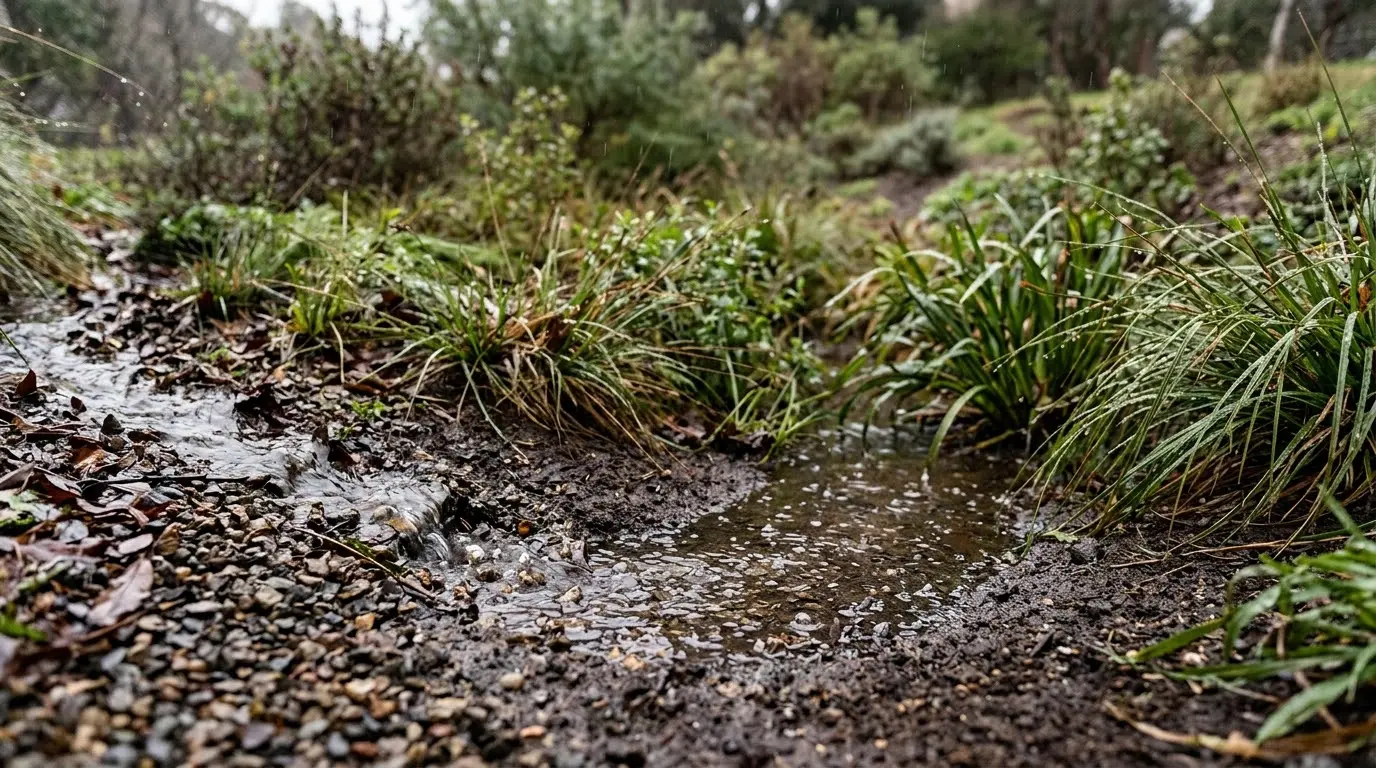
Rainwater entering the ground, cells moving into tissue, and an agent secretly entering an organization are very different situations. In Norwegian, however, they can all involve the word infiltrasjon.
The connection is the idea of something entering or penetrating something else. What enters, how it enters, and whether that process is helpful or harmful depend on the subject.
Infiltrasjon is the Norwegian noun corresponding to the English word “infiltration.” It has established uses in environmental science, medicine, politics, and security. Bokmålsordboka records infiltrasjon as a noun used for penetration or entry, including the movement of substances into tissue and covert entry into an organization.
For readers and language learners, the challenge is choosing the right interpretation. A drainage report and a medical report may use the same word without describing the same kind of event.
What Does Infiltrasjon Mean?
Infiltrasjon describes an entry or penetration process, with a more specific meaning supplied by context.
The most useful English translation is usually infiltration, although a plain-language explanation may be easier to understand.
| Field | Meaning of infiltrasjon | Plain-English explanation |
|---|---|---|
| Hydrology | Water entering the ground | Water soaking into soil |
| Stormwater management | Encouraging water to enter suitable ground | Managing rainfall close to where it falls |
| Wastewater treatment | Water passing through suitable soil as part of treatment | Ground-based treatment in a designed system |
| Medicine | Fluids, substances, or cells entering tissue | A tissue process requiring clinical context |
| Politics and security | Covert entry into another organization or state | Establishing a hidden presence |
The word does not automatically describe something harmful.
Water entering suitable ground can be a desired process. Secret entry into an organization carries a different meaning. In medicine, interpretation depends on what is entering the tissue and the surrounding findings.
The shared vocabulary should not hide those differences.
The Word’s Origin and Norwegian Forms
Bokmålsordboka traces infiltrasjon to Medieval Latin infiltratio. NAOB also connects its formation with related Latin or Romance-language patterns.
In Bokmål, it is a masculine noun:
| Form | Norwegian | English |
|---|---|---|
| Indefinite singular | en infiltrasjon | an infiltration |
| Definite singular | infiltrasjonen | the infiltration |
| Indefinite plural | infiltrasjoner | infiltrations |
| Definite plural | infiltrasjonene | the infiltrations |
These forms are recorded in the dictionary’s inflection table.
The related verb is infiltrere, corresponding to “infiltrate.”
In environmental writing, you may encounter compounds such as infiltrasjonsanlegg, meaning an infiltration system or facility. Translating the complete compound is often more useful than translating its parts separately.
Infiltrasjon in Hydrology: Water Entering the Ground
In water science, infiltration describes water moving from the land surface into the ground. The U.S. Geological Survey treats it as part of the water cycle.
A simple example is rainfall reaching a garden.
Some water may enter the soil. Some may remain temporarily on the surface, while some may flow away as runoff. The balance depends on conditions rather than rainfall alone.
USGS educational material identifies soil type, land use, existing soil moisture, and the intensity and duration of a storm as influences on infiltration rates.
Infiltration Is Not the Same as Groundwater Recharge
Water entering the ground does not necessarily reach an aquifer.
Infiltration concerns entry through the surface. Groundwater recharge concerns water reaching and replenishing groundwater. USGS describes infiltration followed by movement to the water table as one form of natural recharge.
This distinction prevents an oversimplified explanation of the water cycle. “The rain soaked into the soil” does not establish how much eventually became groundwater.
A Norwegian Example
Infiltrasjon av regnvann reduserer avrenningen fra området.
Infiltration of rainwater reduces runoff from the area.
This original teaching example describes an environmental process. It does not imply that all rainfall disappears into the ground or that runoff is eliminated.
Infiltrasjon in Stormwater and Wastewater Management
Natural infiltration becomes an engineering subject when people design systems around it.
Two important applications are stormwater management and wastewater treatment. They involve different water sources and should not be treated as interchangeable.
Managing Rainwater
Norway’s Environment Agency describes infiltration as part of a three-stage approach to stormwater: infiltrate smaller amounts where feasible, temporarily store larger amounts, and provide safe routes for excess water.
Examples include permeable surfaces and rain gardens. The agency emphasizes local ground conditions, groundwater, and the possibility of damage to buildings when assessing suitable measures.
The goal is therefore broader than making water enter the soil quickly. A design must also consider where the water goes and what happens when the system’s capacity is exceeded.
A rain garden beside a building, for example, needs more consideration than simply excavating a shallow depression.
Treating Wastewater
An infiltrasjonsanlegg can also refer to a ground-based wastewater treatment system.
The Norwegian Institute of Bioeconomy Research, NIBIO, explains that suitable soil can support treatment through physical, chemical, and biological processes. It also states that feasibility requires ground investigations and assessment of potential pollution effects by appropriately qualified specialists.
This is a designed treatment application. It does not mean that allowing untreated wastewater to soak into arbitrary ground is acceptable.
A property owner reading the term in a municipal document should establish whether it concerns rainfall, wastewater, or another system before interpreting the requirements.
What Does Infiltrasjon Mean in Medicine?
Medical infiltration concerns substances or cells entering or accumulating within tissue.
The U.S. National Library of Medicine’s medical terminology resources describe infiltration as the entry or accumulation of substances or cells in tissue. The exact interpretation depends on the medical context.
The term identifies a process or finding. It does not provide a diagnosis on its own.
Cellular Infiltration
The National Cancer Institute’s terminology describes a cellular infiltrate as a finding involving cells in locations or numbers where they would not normally be found.
The important questions are which cells are involved, where they are located, and what the rest of the examination shows.
A reader should therefore avoid assigning one fixed medical meaning to every occurrence of infiltrasjon.
Infiltrating Cancer
In a cancer-specific context, the meaning is more particular.
The National Cancer Institute defines infiltrating cancer as cancer growing beyond the tissue layer where it developed into surrounding healthy tissue. It also uses the term “invasive cancer.”
This does not mean every mention of infiltration indicates cancer. That interpretation requires an explicitly cancer-related context.
If the word appears in a personal medical report, the useful next question is what it describes in that specific report. A dictionary translation cannot determine the clinical significance.
Infiltrasjon in Politics and Security
In political and security language, infiltration concerns secretly placing people inside another organization, company, or state.
Store norske leksikon describes purposes that can include espionage, sabotage, undermining an opponent, or influencing attitudes from within.
The defining feature is the concealed purpose.
Ordinary participation in an organization is not automatically infiltration. Neither is openly disagreeing with its leadership.
Consider this original Norwegian example:
Rapporten undersøker mulig infiltrasjon av organisasjonen.
The report examines possible infiltration of the organization.
The word mulig, meaning “possible,” matters. The sentence reports an investigation, not an established conclusion.
When reading news coverage, look for distinctions between an allegation, a suspicion, and a verified finding. The noun itself does not tell you which level of evidence exists.
How to Identify the Intended Meaning
The surrounding words usually provide the strongest clues.
| Nearby Norwegian word | English meaning | Likely context |
|---|---|---|
| regnvann | rainwater | Hydrology or stormwater |
| overvann | surface water or stormwater | Drainage planning |
| avløpsvann | wastewater | Treatment systems |
| grunnvann | groundwater | Hydrology |
| vev | tissue | Medicine |
| celler | cells | Medicine |
| agenter | agents | Security |
| spionasje | espionage | Intelligence or politics |
Start by identifying what is entering what.
In a drainage document, water enters the ground. In a medical discussion, cells or substances enter tissue. In a security report, people enter an organization with a concealed purpose.
Then examine whether the sentence describes a natural process, a planned intervention, or an alleged hostile activity.
This approach produces a more accurate interpretation than attaching an emotional meaning such as “dangerous” to the word itself.
Conclusion
Infiltrasjon has several established meanings connected by the idea of entry or penetration.
Its practical meaning changes with the setting: water entering soil, substances or cells entering tissue, or people secretly entering an organization. Reading the surrounding words and identifying what is moving into what usually resolves the ambiguity.
For technical or medical documents, that translation is a starting point. The full sentence and subject determine what the term actually tells you.
Frequently Asked Questions
Is infiltrasjon a Norwegian word?
Yes. It is an established noun recorded in Norwegian dictionaries.
What is its English translation?
The usual translation is infiltration. In a water-related explanation, “water soaking into the ground” may be clearer.
Is infiltration the same as filtration?
No. Infiltration describes entry or penetration. Filtration concerns separation as material passes through a filtering medium. The processes can occur together in a treatment system.
Does medical infiltrasjon always mean cancer?
No. Cancer is one specific context. The meaning depends on the substances, cells, tissue, and findings involved.
What is an infiltrasjonsanlegg?
It is an infiltration system or facility. In Norwegian wastewater guidance, the term describes a designed ground-based treatment system.
Is infiltration always unwanted?
No. It may be encouraged in suitable water-management systems, while covert organizational infiltration has a different purpose.

Search for Pabington, and the results can suggest several different subjects: a family name, a website, or an English village. Some pages discuss its supposed history, while others describe it as an emerging internet expression.
The clearest evidence supports a narrower explanation.
Pabington appears in a genealogy database as a surname and has been used as a website name. Its presence online does not establish a single accepted meaning, a confirmed place of origin, or a widespread cultural trend.
Understanding why the word appears in searches means separating these documented uses from the stories attached to them.
What Does Pabington Mean?
Pabington is best approached as a name whose meaning depends on the source.
It does not need a dictionary definition to appear online. Family names, website names, and other proper names can all produce search results without becoming everyday vocabulary.
The reviewed sources point to three distinct situations:
| Context | What the evidence supports |
|---|---|
| Family history | Ancestry maintains a surname page and indexed record summaries for Pabington |
| Website identity | Websites have used Pabington as their publishing name |
| Historical or geographical explanations | A specific origin or recognized settlement was not established through the reviewed evidence |
These uses should not automatically be combined. A website adopting a surname-like name does not prove a connection with the families appearing in historical records.
Pabington as a Family Name
Ancestry’s Pabington page reports one family recorded under that spelling in Kent in the 1891 UK census. It also lists census and birth, marriage, and death record categories associated with the name. These are database summaries; the underlying documents were not examined for this article.
That distinction matters when researching an uncommon surname.
An indexed spelling can reflect the original document, a historical spelling variation, or a transcription error. Examining the record image and comparing names, ages, occupations, and addresses would help establish which explanation applies.
The database entry therefore provides a useful research lead. It does not establish how many people currently bear the surname or prove a complete family history.
Anyone investigating a possible ancestor should follow the record trail rather than relying only on a surname overview.
Websites Also Use the Pabington Name
Another reason the word appears online is straightforward: publishers have used it as a website identity.
At the time of review, Pabington.co.uk displayed articles across subjects including technology, business, travel, fashion, and health. Its homepage presents the term as a general-interest publication. That is an observable use of the name, rather than evidence of a separate linguistic meaning.
The situation was different for Pabington.com. Search results retained descriptions of previously indexed articles, but opening the domain returned a hosting notice stating that the domain had expired. That observation describes the page reached during research; it does not establish its future availability.
The two addresses should also be distinguished. Sharing the word spelling does not, by itself, demonstrate common ownership or an editorial relationship.
Is Pabington a Place or a Misspelling?
Pabington resembles names readers may already recognize. That resemblance can make a place-based explanation sound convincing before any location has been identified.
However, this research did not establish a recognized modern town or village called Pabington. That is a limit of the available evidence, rather than proof that the spelling has never appeared in a historical document.
A geographical claim needs something more concrete: a map, gazetteer entry, local authority record, or identifiable archival reference.
Similarly, Pabington could be a typing error in a particular sentence, but it should not always be corrected automatically.
For example, if someone intended to search for another similarly spelled place, the surrounding details might reveal the mistake. If spelling appears as a family name or website title, changing it could erase the intended reference.
Why Search Results Can Make the Word Seem More Established
A search engine retrieves pages that discuss a term. It does not require that term to have one settled definition.
Google’s explanation of Search describes how automated crawlers discover pages and how information is indexed for retrieval. This helps explain how articles, surname pages, and website names can appear together for the same query.
Several pages repeating an explanation may create an impression of agreement. The important question is whether they point to independent supporting evidence.
Without search-volume or social-platform data, the available results also do not establish that spelling is “viral” or widely used in conversation.
Conclusion
Pabington appears online because the name has several separate uses, including genealogy records and publishing websites.
Its search visibility is easier to explain than its supposed deeper meaning. Start with the specific reference a family record, website address, or sentence and check the evidence attached to it. That approach gives a clearer answer than treating every mention as part of one story.
FAQs
Is Pabington a real surname?
Ancestry lists records indexed under the term. Individual documents should be examined before drawing conclusions about a particular family.
What is the origin of Pabington?
A definitive origin was not established through the reviewed evidence. Its appearance alone cannot confirm an Old English derivation.
Is Pabington a website?
Yes. The name has been used by websites, including a general-interest publication at Pabington.co.uk.
Is Pabington internet slang?
The reviewed evidence does not establish a consistent slang meaning or widespread conversational use.
Is Pabington.com currently available?
During research, it displayed an expired-domain notice. Website availability can change.
-

 Technology3 weeks ago
Troozer.com: What Is It and Can You Trust It?
-

 Technology1 week ago
Webinkey.com: What Is It and How Does It Work?
-

 Technology2 weeks ago
Blargz com: What Is It and How Does It Work?
-

 Technology2 weeks ago
SoSoActive: What It Is and What You Can Find on the Platform
-

 News3 weeks ago
Fintechzoom.io Nasdaq: The Future Of Financial Innovations
-

 News2 weeks ago
Newslikeyou.com: What It Is, What It Covers, and Its Content Services
-

 Home & Living3 weeks ago
Homecz: The Ultimate Guide to Modern Smart Home Living
-

 Technology3 weeks ago
Drovenio Latest Technology News: The Future Of Next-Gen AI Innovations